Most visitors meet Tajganj as a traffic jam: the crowded lanes, hotels and rooftop cafés squeezed against the Taj Mahal’s southern wall. But the neighbourhood is as old as the monument. When Shah Jahan’s builders laid out the tomb in the 1630s, they laid out a town beside it — and that town was part of the plan, not a spill-over from it.
In this article
A Town Built Into the Plan
The Taj Mahal complex does not end at the red sandstone gate. Beyond the forecourt to the south, the original design included a market quarter: streets of shops and large caravanserais where travelling merchants could lodge, trade and stable their animals. Historians often call this southern part the Taj Ganji, and the settlement that grew around it was known in Shah Jahan’s time as Mumtazabad, after the empress buried in the tomb.
In other words, the name Tajganj — ganj meaning market — describes exactly what the place was built to be.
Why a Tomb Needed a Market
A monument on the scale of the Taj needed money to run for ever: gardeners, guards, lamps, repairs, the staff who read the Quran at the grave. Mughal tombs were supported by endowments, and the rents from the bazaars and caravanserais of the Taj Ganji, together with the revenue of surrounding villages, were part of how this one was meant to keep itself going.
It is a practical, almost modern idea: build the shops with the landmark, and let the visitors who come to see it pay for its upkeep. Four centuries later, Tajganj still earns its living from the people the Taj draws in.
What You Can Still See
The grand caravanserais have mostly been absorbed into the dense neighbourhood that grew over them, so you will not find a tidy ruin with a signboard. What survives is the shape of the place: lanes that run south from the Taj’s forecourt, old gateways and arches embedded in later buildings, and the sense of a market quarter that has never stopped trading.
Walk south from the area near the Taj’s South Gate and look up from street level — the older brick and sandstone often shows above the modern shopfronts.
Tajganj Today
Modern Tajganj is the part of Agra built around visitors. Budget guesthouses and rooftop cafés with a view of the dome crowd the lanes nearest the Taj, while Fatehabad Road, running south-east, carries the larger hotels and restaurants. It is the most convenient base for a sunrise visit, which is why so many travellers stay here.
For practical advice on timing that first visit, see our Taj Mahal visiting guide; for where to eat once you are out, where to eat after the Taj.
How to Walk It
Go early, when the shutters are going up and the lanes belong to residents rather than tour groups. Keep to the main lanes if it is your first time, wear shoes you do not mind getting dusty, and watch for two-wheelers in the narrow stretches. An hour is enough to get a feel for it.
For a longer walk through Agra’s older quarters, our old city walk covers Kinari Bazaar and the Jama Masjid on the other side of town.
Ending Up on Fatehabad Road
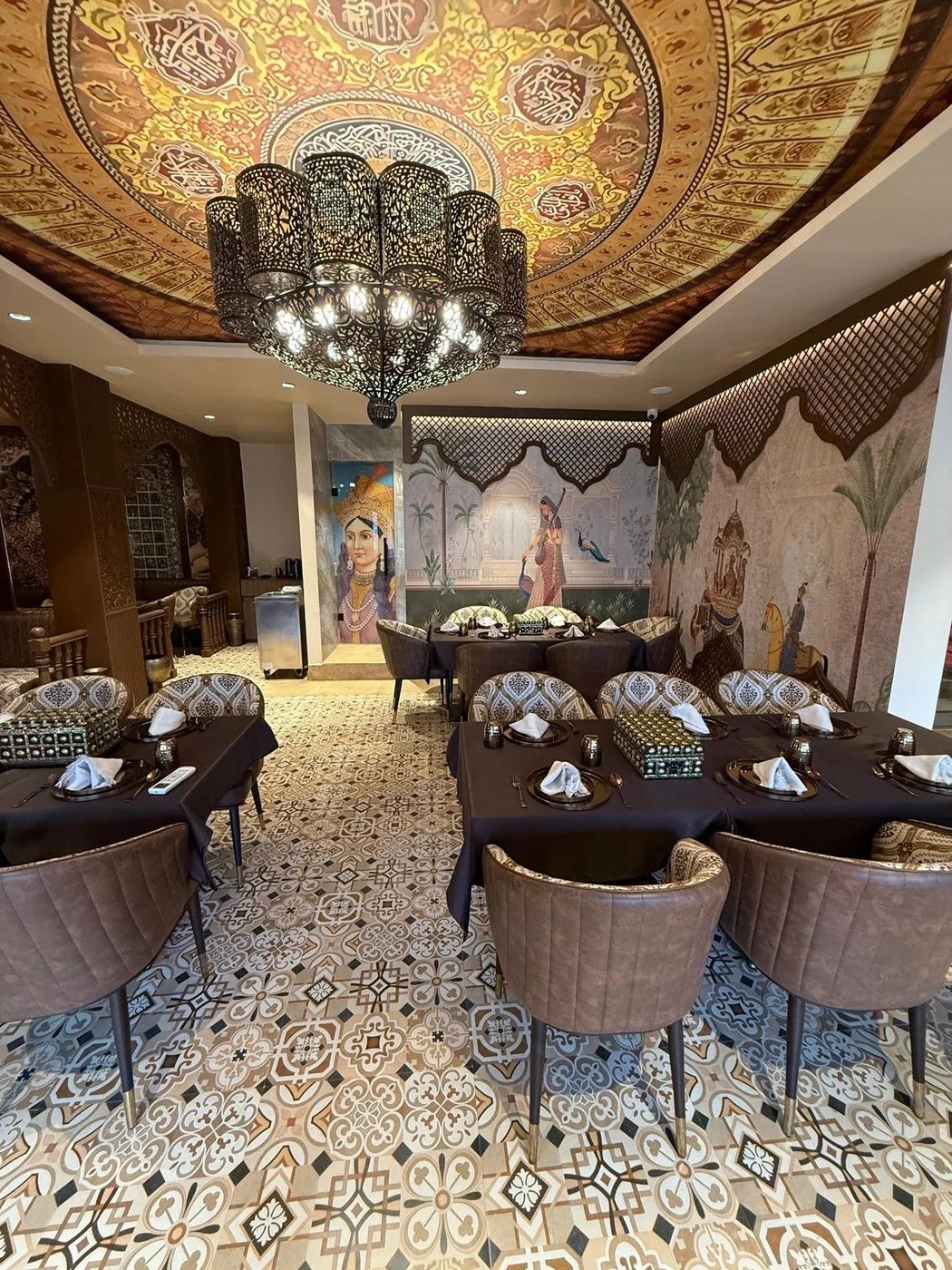
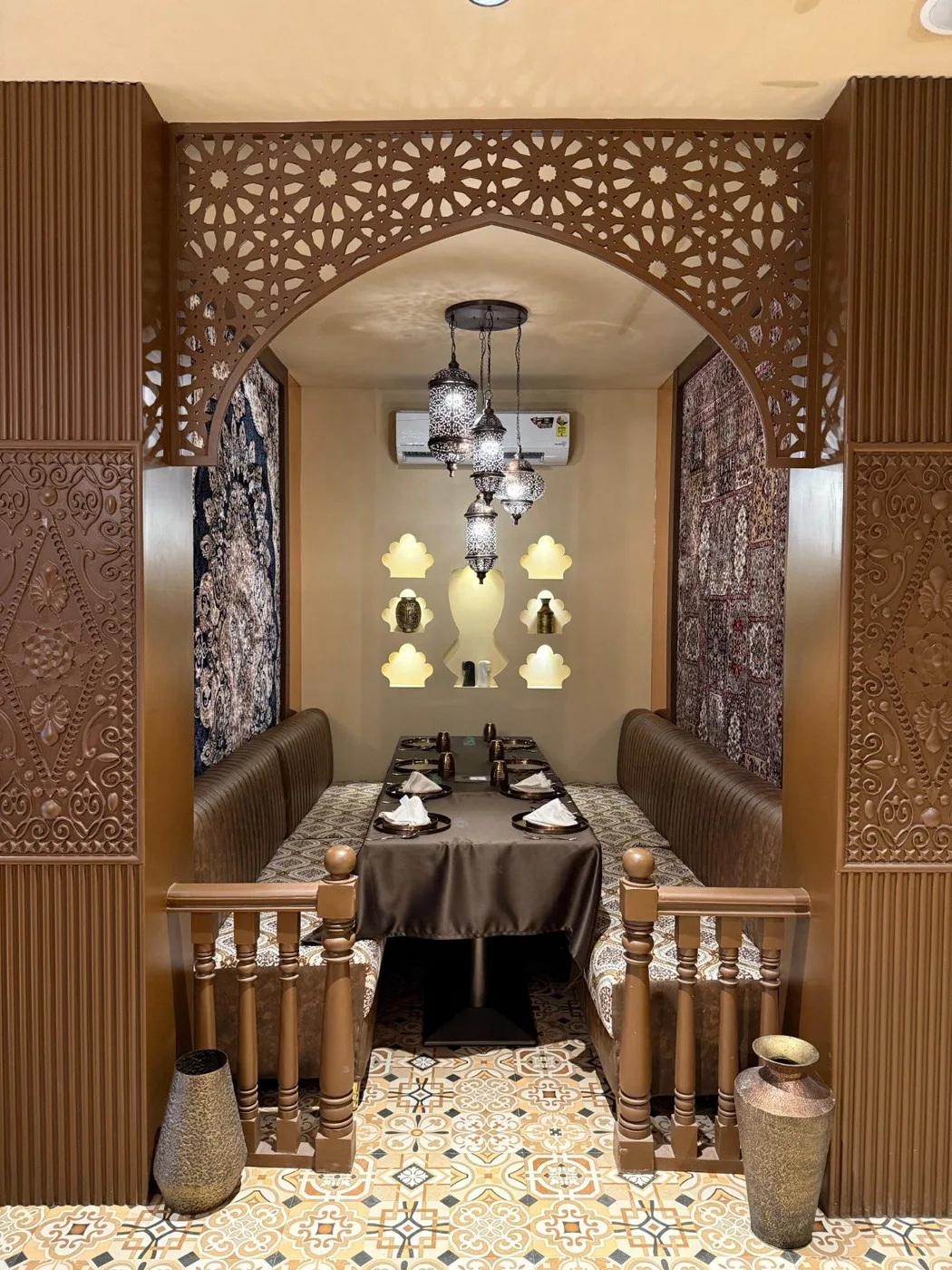
Tajnuma sits in Tajganj too, on the 2nd floor of Jobaaj Complex on Fatehabad Road, opposite Howard Plaza — a few minutes from the Taj’s gates. We open at 12:00 pm and serve pure vegetarian Mughlai food, the cuisine of the same court that planned this neighbourhood.