Visitors to Sikandra come for Akbar’s great tomb and leave. Very few walk on to a plain, sturdy building nearby that holds the grave of the woman who gave Akbar his heir. It is one of the quietest Mughal monuments in Agra, and one of the most interesting to think about.
In this article
Who She Was
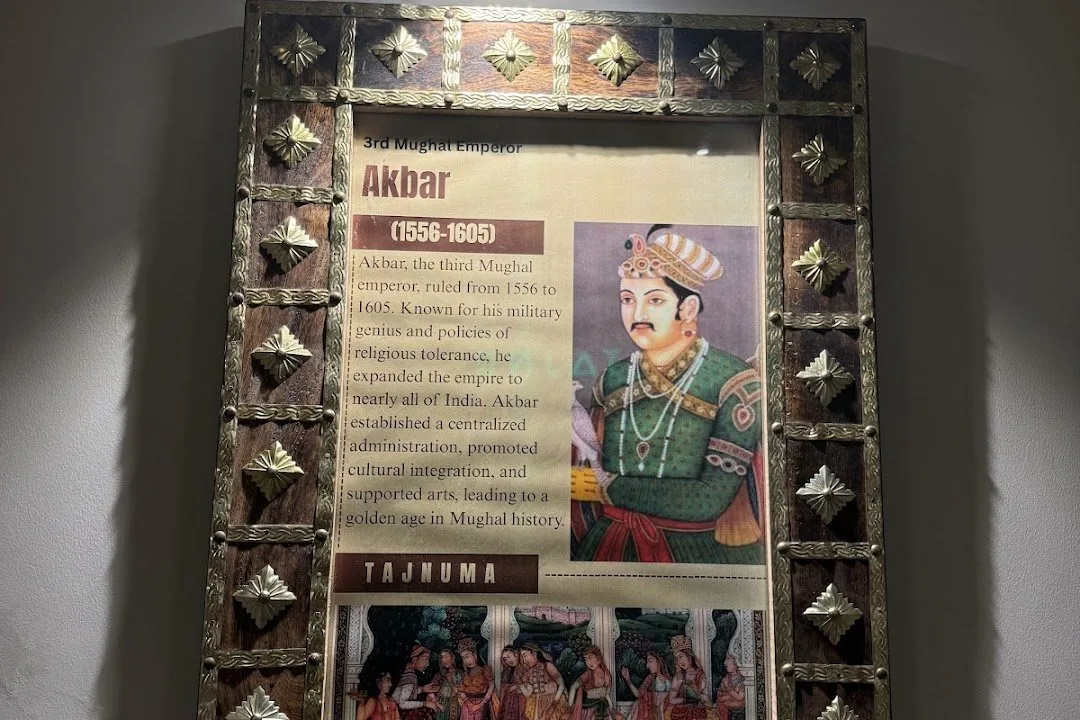
Mariam-uz-Zamani was a Rajput princess of the Kachhwaha house of Amber, near Jaipur, who married Akbar in 1562. She was the mother of Prince Salim, who became the emperor Jahangir, and she carried the title Mariam-uz-Zamani — “Mary of the Age”. She was also a figure of influence in her own right, known to have traded on a large scale.
Popular films and television call her “Jodha Bai”, but that name does not appear in the records of Akbar’s reign; historians use Mariam-uz-Zamani.
An Older Building, Reused
The structure is generally believed to have begun life before the Mughals, as a baradari, a pavilion, of the Lodi period — when Sikandar Lodi made Agra his capital and gave his name to Sikandra. After Mariam-uz-Zamani died in the early 17th century, it was adapted as her tomb in the reign of her son Jahangir.
That makes it a building with two lives: a Lodi pavilion with a Mughal tomb built into it, a neat summary of how Agra itself passed from one dynasty to the next.
What to Look For
The tomb is a square, flat-roofed building of brick and stone, with a grid of chambers on the ground floor. The actual grave is in a chamber below, while a cenotaph marks it above — the same arrangement you will find at the Taj Mahal. Traces of carved stone and painted plaster survive here and there.
It has none of the polish of the great monuments, which is exactly its charm: you can see how these buildings were made.
Visiting
The tomb is close to Akbar’s tomb, so it adds little time to a visit to Sikandra. It is protected by the Archaeological Survey of India; check current opening hours and any entry fee on the ASI site before you go, as these change.
Back in Tajganj, Tajnuma on Fatehabad Road opens at 12:00 pm and serves pure vegetarian Mughlai food — the cuisine of the court in which Mariam-uz-Zamani lived.