A vegan arriving in Agra gets good news and a catch. The good news: this is a city where vegetarian food is the default rather than the exception, menus are full of lentils, vegetables and grains, and nobody will look puzzled when you say you do not eat meat or eggs. The catch is one word, and it is in almost everything: dairy. North Indian cooking runs on ghee, curd, cream and paneer, and the word “vegetarian” here includes all of them.
In this article
Vegetarian Does Not Mean Vegan
In India, “veg” means no meat, fish or (usually) eggs. Milk is not only allowed but honoured; in much of Hindu tradition it is a pure food, and the region around Agra — Braj, the country of Krishna — is famous for dairy. So a restaurant that is proudly pure vegetarian may still use ghee in its breads, butter in its dals and cream in its gravies.
Do not let that put you off. It just means you need to ask specific questions, rather than relying on the green dot on the menu.
Where Dairy Hides
- Ghee — clarified butter, used for tempering dals, finishing rice and brushing breads. It is the single most common hidden ingredient.
- Butter and cream — the words makhani, malai and shahi on a menu almost always mean them.
- Curd (yogurt) — in marinades for anything from the tandoor, in raita, kadhi and many chaats.
- Paneer and khoya — fresh cheese and reduced milk; easy to spot when named, less so when blended into a kofta or a sauce.
- Breads — naan and many leavened breads are made with milk or curd in the dough, and often finished with butter.
- Sweets — most Indian sweets are milk-based. Agra's petha is a notable exception, being ash gourd and sugar, though flavoured versions can include khoya.
The Questions to Ask
Short, concrete questions get better answers than the word “vegan”, which not every cook will use. Try:
- “Is this cooked in oil or in ghee? Can it be made in oil?”
- “Is there butter, cream or curd in this?”
- “Is the roti plain, without butter?”
- “Is the marinade made with curd?”
A useful phrase in Hindi is “doodh, dahi, ghee, makhan, paneer nahin” — no milk, curd, ghee, butter or paneer. Honey is less common in savoury cooking but turns up in some drinks and desserts, so ask about that too if it matters to you.
Dishes That Are Often Vegan, or Easy to Adapt
None of these is guaranteed — recipes vary from kitchen to kitchen — but they are good places to start the conversation:
- Plain roti or tandoori roti, ordered without butter.
- Steamed or jeera rice, and plain vegetable pulao if cooked in oil.
- Yellow dals and dal tadka tempered in oil rather than ghee.
- Dry vegetable dishes — potato, cauliflower, okra, aubergine — and chana masala.
- Tomato-based soups and shorbas without a cream finish.
- Chaat made with chutneys only and no curd; pani puri is usually dairy-free.
- Fresh lime soda, sugarcane juice and coconut water.
Street Food and Breakfast
Agra's famous breakfast of bedai and potato curry with jalebi is plant-based in its basic form — wheat, lentils, potato, sugar — but the frying fat, and the curd sometimes served alongside, are worth asking about. Our breakfast guide covers what is on the plate. Chai is made with milk by default; black tea or lemon tea is the usual alternative.
Eating Vegan at Tajnuma
Tajnuma is a pure vegetarian kitchen, which means no meat, fish or eggs, but much of our Mughlai cooking uses dairy, as Mughlai cooking traditionally does. We would rather you asked than guessed. Tell your server you are vegan when you sit down and they will go through the menu with the kitchen.
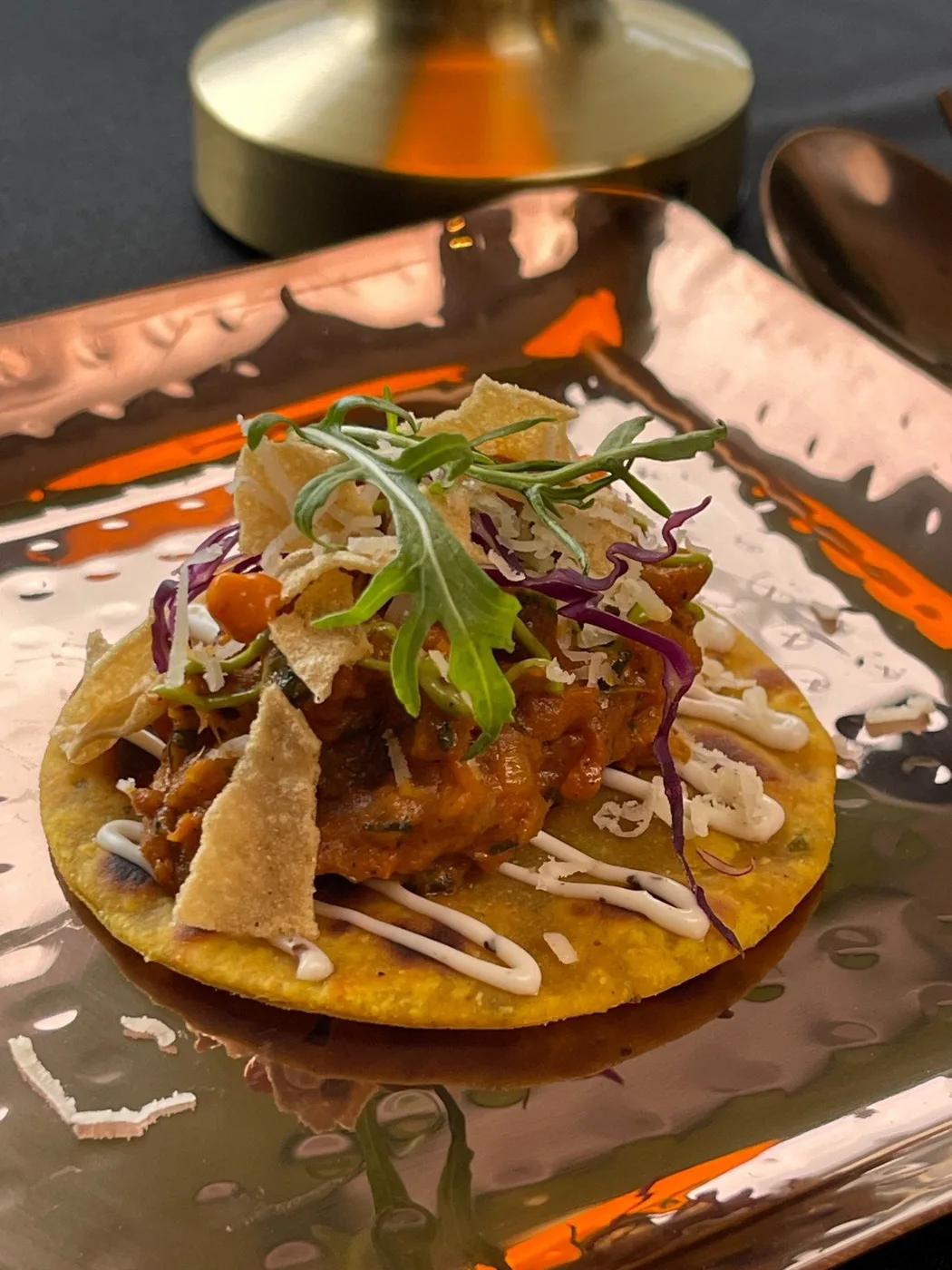
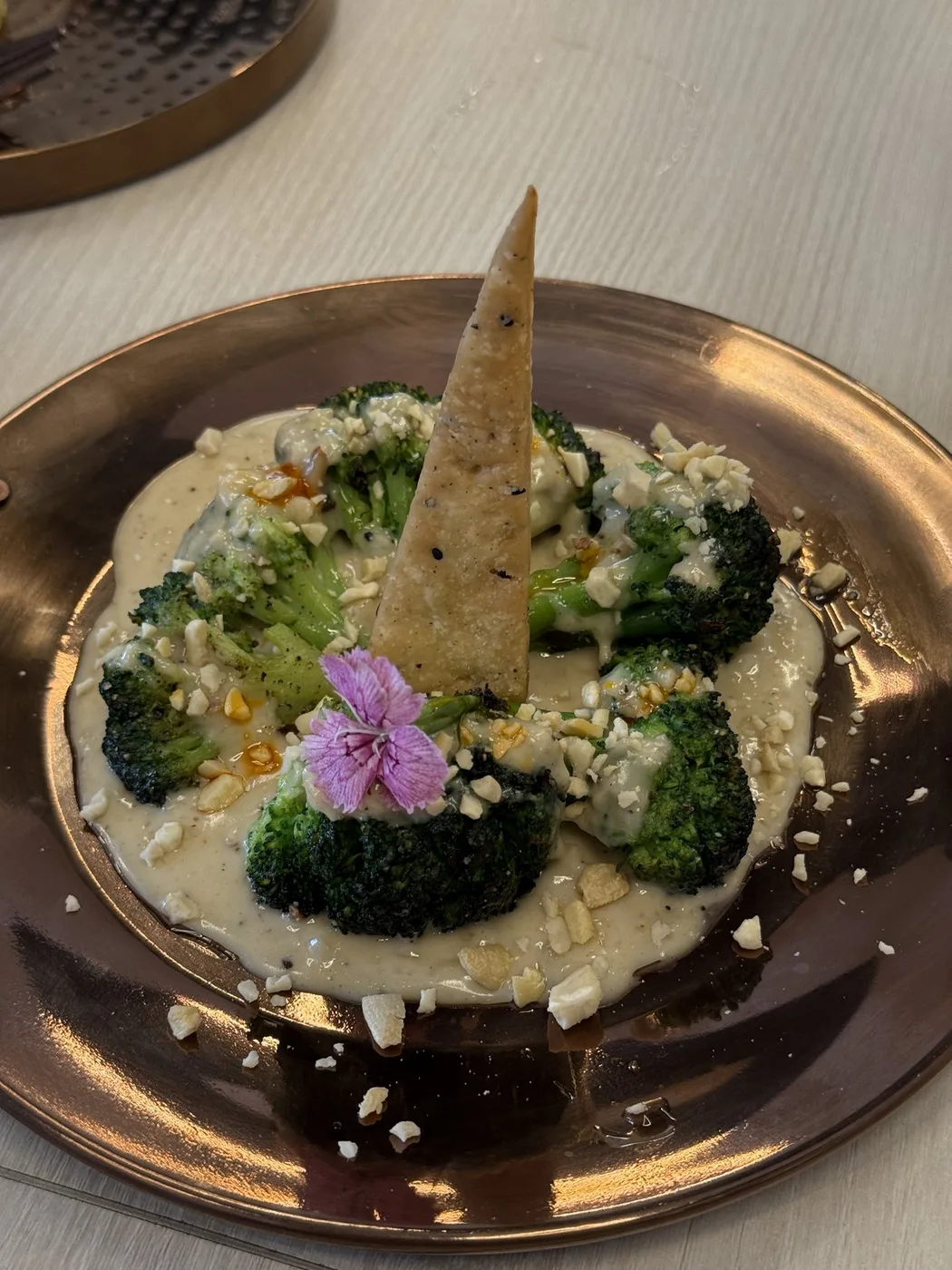
Dishes worth asking about include the Tamatar Dhaniya ka Shorba and Moringa Sticks Shorba, the Makkai aur Broccoli Seekh Kabab, Kathal-e-Achari Tikka, Dal Tadka, Jeera / Steam Rice, Veg Pulao, Green Salad, Masala Papad and plain roti; for a drink, Fresh Lime Soda, Virgin Mojito or Emliya. Whether each can be made without dairy on the day is the kitchen's call, so please check. If you also avoid onion and garlic, our Jain food guide explains how that works here.