You will not leave Agra without being offered petha. It is sold in boxes at every monument exit, stacked in shop windows across the city, and pressed on visitors as the thing to carry home. Most people eat one cube, find it startlingly sweet, and never work out what they were actually eating. It is worth knowing, because the good version is very good and quite different from the boxed version at the tourist gate.
In this article
What Petha Actually Is
Petha is made from ash gourd — the large, pale, waxy squash also sold as winter melon or white pumpkin, and known in Hindi as petha itself, which is where the sweet gets its name. The vegetable is firm, almost flavourless, and holds its shape under long cooking, which is exactly what the process needs.
The gourd is peeled, deseeded and cut into pieces, treated and then cooked in sugar syrup until the flesh turns translucent and takes the sugar right through. What comes out is candied vegetable: glassy, faintly fibrous, and sweet in a clean way rather than a fatty one. Unusually for an Indian sweet, there is no dairy in it at all, which is why it travels well and why it is one of the few traditional sweets a vegan can eat without asking questions.
The Legend, and What We Actually Know
The story you will be told is that petha was invented in Shah Jahan's kitchens for the workforce building the Taj Mahal, on the instruction of the emperor or one of his court, to feed thousands of labourers something sweet and durable.
It is a good story and it may well have some truth in it, but it should be described as what it is: a widely repeated tradition rather than a documented fact. Contemporary Mughal records do not establish it, and the versions in circulation disagree with each other about who ordered it and why. What is solidly true is simpler — the sweet is strongly associated with Agra, has been made here at commercial scale for a long time, and the city is the place people buy it.
The Varieties Worth Knowing
Sookha petha is the dry version: cubes with a slight crust of set sugar, firm to bite. It is the standard boxed type and the one that travels best.
Angoori petha is made in small grape-sized pieces — angoor is grape — and kept wet with syrup. Softer, juicier, more delicate, and the one most locals will tell you to buy.
Paan petha is flavoured and often shaped or coloured to echo betel leaf, sometimes with a filling. It divides people sharply.
Kesar petha takes saffron, and there are rose, coconut, dry-fruit and chocolate versions in every shop now, some of them serious and some of them purely for the boxes.
If you buy one kind, buy angoori. If you are carrying it a long way, buy sookha.
Buying It Well
The best petha is not bought at a monument exit. Agra has a long-established sweet trade concentrated in the older commercial parts of the city — the lane around Noori Darwaza is known for it — and the difference between a specialist shop and a souvenir counter is obvious the moment you taste both.
Two practical things. First, ask when it was made; petha is best fresh and the wet varieties especially so. Second, buy the wet kinds in a sealed tin or tub rather than a paper box if they are going in a suitcase, because syrup and luggage are a bad combination. Dry petha keeps for weeks at room temperature; the syrupy kinds want eating within a few days.
The Other Two Things Agra Is Known For
Dalmoth is the savoury counterweight: a dark, spiced mixture of fried lentils, nuts and fine gram-flour strands. It is salty, faintly bitter and exactly what you want after a box of petha.
Bedai with jalebi is the local breakfast — a puffed, fried bread stuffed with spiced lentils, served with a potato curry, and eaten with a hot jalebi alongside. It is heavy, it is early, and it is the most genuinely local thing you can eat in the city. Our guide to eating vegetarian in Agra covers where all three of these fit into a day.
Sweets at the End of a Meal
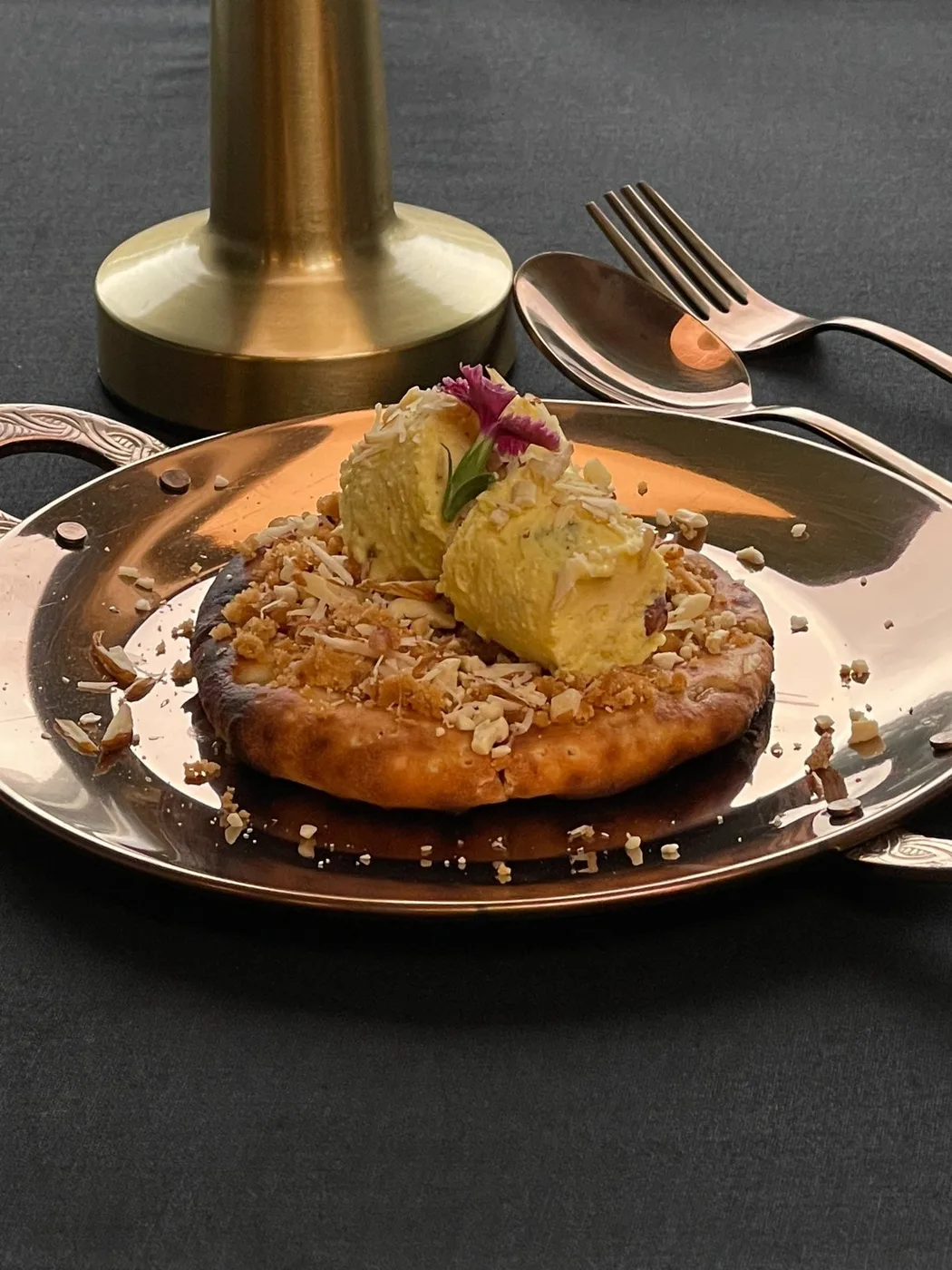
Petha is a shop sweet rather than a restaurant dessert — it is what you buy in a box, not what arrives at the end of dinner. The restaurant end of the tradition is different: reduced milk, saffron, nuts, sugar and flour, in dishes like shahi tukda and daulat ki chaat that belong to the Mughlai sweet course proper.
Both are worth having, and they are not competing. Buy petha for the journey home; eat the milk sweets while you are here. Ours are on the menu and in both tasting menus.