Few questions start an argument at an Indian table faster than this one. Pulao and biryani look alike, share most of their ingredients and come out of the same kitchen tradition. They are still two different dishes, and the difference is not the amount of spice or the presence of meat. It is the method.
In this article
Pulao: Cooked Together
In a pulao, everything cooks in one pot. Whole spices are warmed in ghee, the vegetables or other ingredients go in, then the rice, then a measured quantity of water or stock. The pot is covered and the rice absorbs all the liquid as it cooks. Nothing is drained away.
The result is even: every grain carries the same flavour, the spicing is gentle, and the dish is usually meant to be eaten with something else — a dal, a gravy or a raita. The name belongs to a family of words for this method that runs from Central Asia to the Mediterranean: polow in Persian, pilaf in English.
Biryani: Cooked Apart, Then Layered
In a biryani, the rice and the other main ingredient start separately. The rice is boiled in plenty of spiced water until it is only part-cooked, then drained. It is layered in a heavy pot with the vegetables, paneer or other filling, which have their own marinade or gravy, along with fried onions, herbs and saffron.
The pot is then closed — traditionally sealed with a strip of dough — and finished over low heat. This is dum, cooking in trapped steam. Because the layers are never stirred, a spoonful of biryani is uneven on purpose: some grains white, some stained with saffron, some carrying the gravy. It is a complete dish rather than an accompaniment.
Where the Names and Stories Come From
The word biryani is Persian in origin, but dictionaries do not agree on which word: some derive it from birinj, rice, and others from biryan, to fry or roast. Both dishes reached India with the Persian and Central Asian cooking we have described in From Persia to Agra.
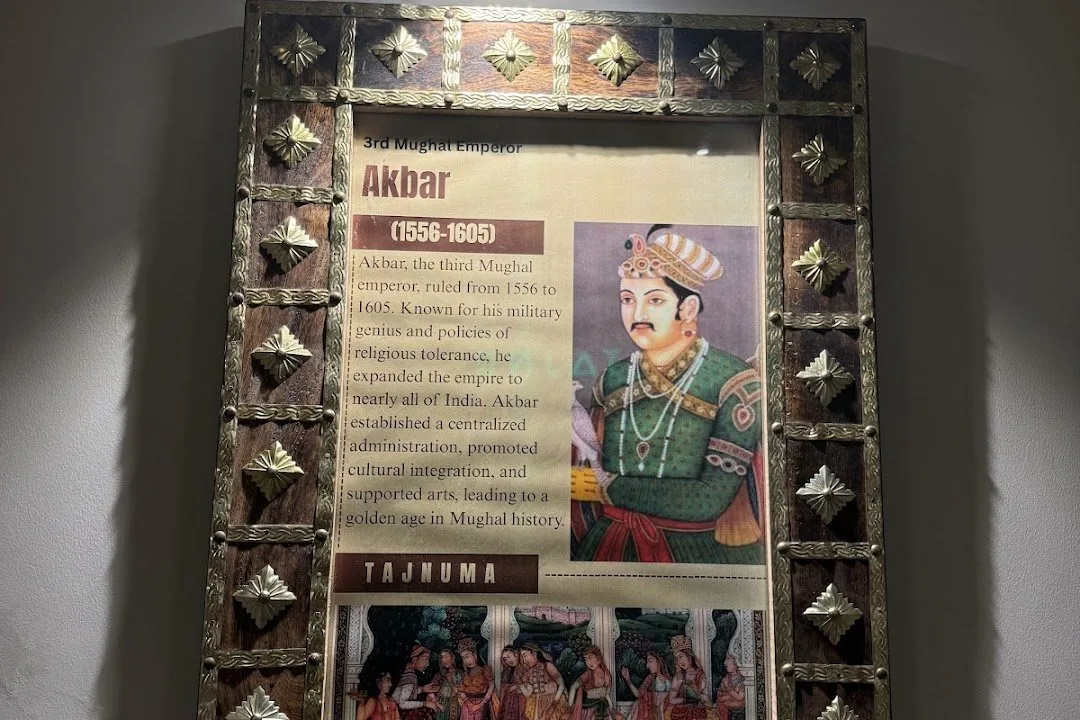
The Ain-i-Akbari, the record of Akbar's court, lists dishes of rice cooked with meat among the classes of food made in the imperial kitchen, and these are the ancestors of both. The popular stories are another matter. You will often read that biryani was invented on the orders of Mumtaz Mahal to feed the army. It is a good story with no contemporary source behind it, and it should be treated as legend.
Is Vegetarian Biryani Really Biryani?
The standard joke is that a vegetarian biryani is only a pulao. By the definition above, that is a question about how it was cooked, not about what is in it. If the rice was part-boiled, layered and finished on dum, it is a biryani. If everything was cooked together in one pot, it is a pulao, and a perfectly good thing to be.
Nor is rice without meat a modern idea. Uttar Pradesh has its own vegetarian rice dish, tehri, cooked with potatoes and turmeric, and the Mughal kitchen itself kept a whole class of dishes made without meat — the subject of our piece on vegetarian Mughlai history.
What Goes Into a Vegetarian Biryani
The filling has to stand up to the layering. Mixed vegetables are the usual choice. Paneer holds its shape and takes a marinade well. Unripe jackfruit, kathal, is used across north India for its firm, fibrous texture and is a seasonal ingredient. Soya chaap is a more recent addition to the same list.
Biryani is normally served with a raita, because the curd cools the spice. Burani raita is the one most often paired with it.
The Rice Dishes at Tajnuma
Our menu keeps the two apart. The biryani section, Dam-e-Shahi, has four: Veg Biryani, Paneer Tikka Biryani, Malai Soya Chaap Biryani and a seasonal Kathal Biryani. Every one is vegetarian, as the whole kitchen is.
The pulaos are listed separately with the rice and accompaniments: a Veg Pulao, and the Zafrani Zarda Pulao, a sweet saffron rice with nuts and raisins that is closer to the dessert tradition than to a main course. Burani Raita is on the same page. If you are choosing a whole meal, the twelve dishes worth ordering will help.