Mughlai food is usually described as Persian food cooked in India. That is roughly right, and it leaves out most of what is interesting. The cuisine was a meeting of several kitchens over more than a century, and Agra — the Mughal capital for much of that time — is one of the places it happened. Here is how the pieces arrived.
In this article
The Central Asian Layer
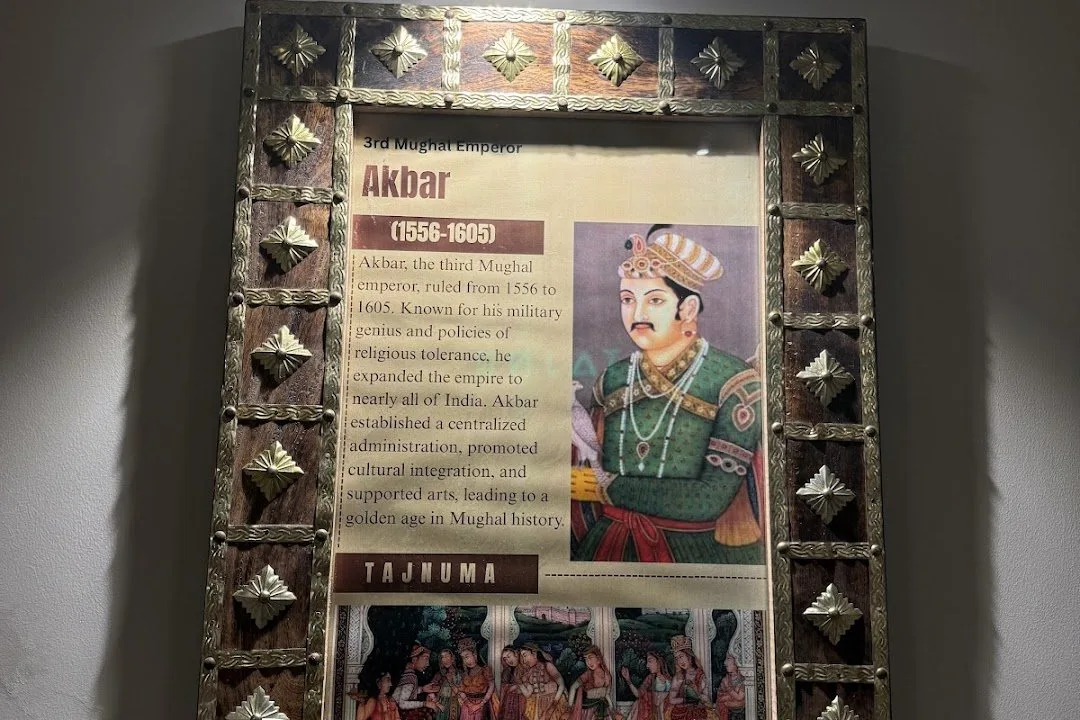
The dynasty began with Babur, a prince from the Ferghana valley in present-day Uzbekistan, who took Delhi and Agra in 1526. The food of his homeland was the food of the steppe and its oasis cities: mutton, rice, wheat bread, yogurt, and dried fruit and nuts from the orchards of Central Asia. Babur's memoirs complain about the lack of good melons and grapes in Hindustan and record him having them brought in.
That taste for dried fruit, nuts and orchard fruit never left the Mughal table. Almonds, pistachios, raisins and apricots in a pulao or a korma are Central Asian at root.
The Persian Layer
Babur's son Humayun lost the empire in 1540 and spent years in exile, much of it as a guest of the Safavid Shah of Persia. When he returned to reclaim Delhi in 1555 he brought Persian artists, administrators and tastes with him. Persian became the language of the Mughal court and stayed so.
Persian cooking brought refinement more than raw ingredients: rice cooked with extraordinary care, saffron, rosewater, sweet-and-sour combinations with fruit, and a taste for elaborate presentation. Much of the vocabulary of the Mughlai menu is Persian — pulao is related to the Persian polow, naan and kebab are Persian words, and sherbet comes from the Arabic-Persian word for a drink.
What India Brought
What turned all this into something new was India itself. Indian kitchens contributed a depth of spice the Persian tradition did not have — pepper, ginger, cardamom and turmeric used in combination rather than singly. They contributed ghee and a dairy repertoire of extraordinary range: slow-reduced milk, curd hung and spiced, milk sweets built on centuries of practice. And they contributed a deep tradition of vegetarian cooking, especially of lentils.
Most of all, they contributed cooks. The people who actually worked in the Mughal kitchens were largely Indian, and they cooked the new dishes with the techniques and instincts they already had.
Where the Two Met: Rice, Bread and Dum
The meeting shows most clearly in rice. The Persian pulao — rice and meat cooked together in stock — met Indian spicing and became something richer and more layered. Out of that family of dishes, over time, came biryani, in which rice and a spiced filling are layered, sealed and finished on dum.
Bread shows it too. The tandoor was already known in north India; the Mughal kitchen made it central, and leavened and enriched breads — khameeri naan, sheermal — became part of the Indian repertoire.
What Came Later
Several things now thought of as Mughlai arrived after the great Mughals. Chillies, tomatoes and potatoes are all American crops, brought by European traders; the chilli came early, the tomato and potato much later. A tomato-rich “Mughlai” gravy is a modern dish in a historical style.
And the cuisine kept moving after Agra. As Mughal power declined in the eighteenth century, cooks followed patronage to Lucknow, Hyderabad, Murshidabad and elsewhere, and each court developed its own branch of the tradition. Awadhi dum cooking in Lucknow is one of its most famous descendants.
Tasting the Layers
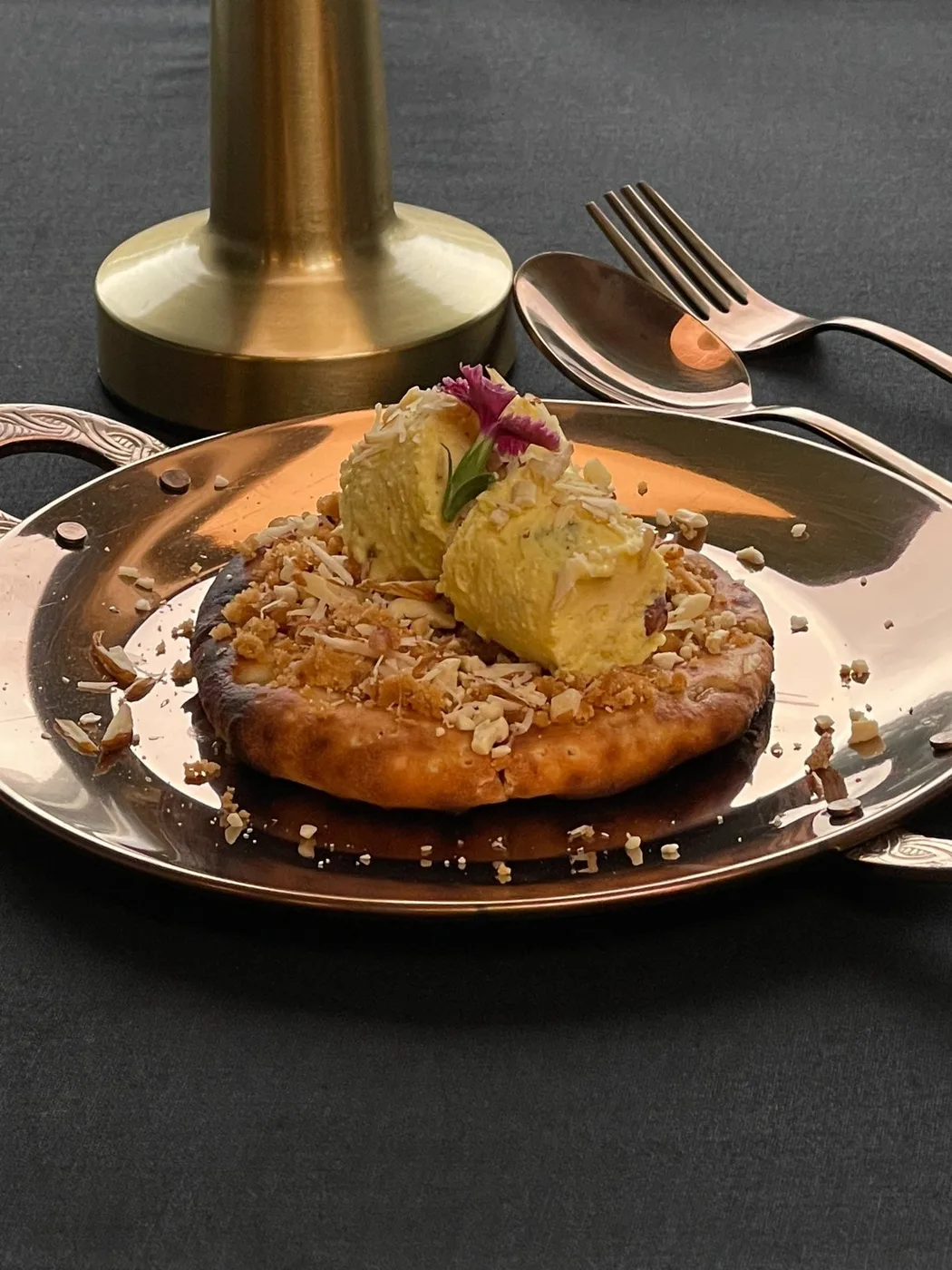
In a single Mughlai meal you can still taste every layer: Central Asian dried fruit in a pulao, Persian saffron and rosewater in a dessert, Indian dairy and spice in a dal or a kofta. Our kitchen cooks the whole tradition entirely without meat; the spice box and the Mughal kitchen fill in more of the story, and the Mughlai tasting menu is the quickest way to eat it.