People arrive at a vegetarian Mughlai restaurant with a reasonable question behind their eyes, even when they are too polite to ask it: is this not a contradiction? Mughlai cooking is the cooking of a court famous for its kebabs and its biryani. Taking the meat out of it sounds like taking the point out of it. The historical record answers this better than any menu can.
In this article
The Assumption, and Where It Comes From
The idea that Mughlai means meat is not invented. The court ate a great deal of it, the most famous dishes of the tradition are built on it, and the restaurant version of Mughlai cooking that spread across India in the twentieth century leaned on it heavily.
But the assumption quietly does something else: it takes the most visible part of a very large repertoire and treats it as the whole. The court kitchen cooked across a far wider range than the shorthand allows.
A Named Class of Meatless Dishes
The Ain-i-Akbari, the administrative record of Akbar's household compiled in the 1590s, groups the kitchen's cooked dishes into classes. One of those classes is defined by containing no meat at all.
This is worth sitting with. It is not a note that vegetarian food was occasionally available on request. It is a formal category within the imperial kitchen's own classification, recorded alongside the meat-and-rice dishes and the meat-and-spice dishes as a standing part of what the department cooked.
Akbar and Meat
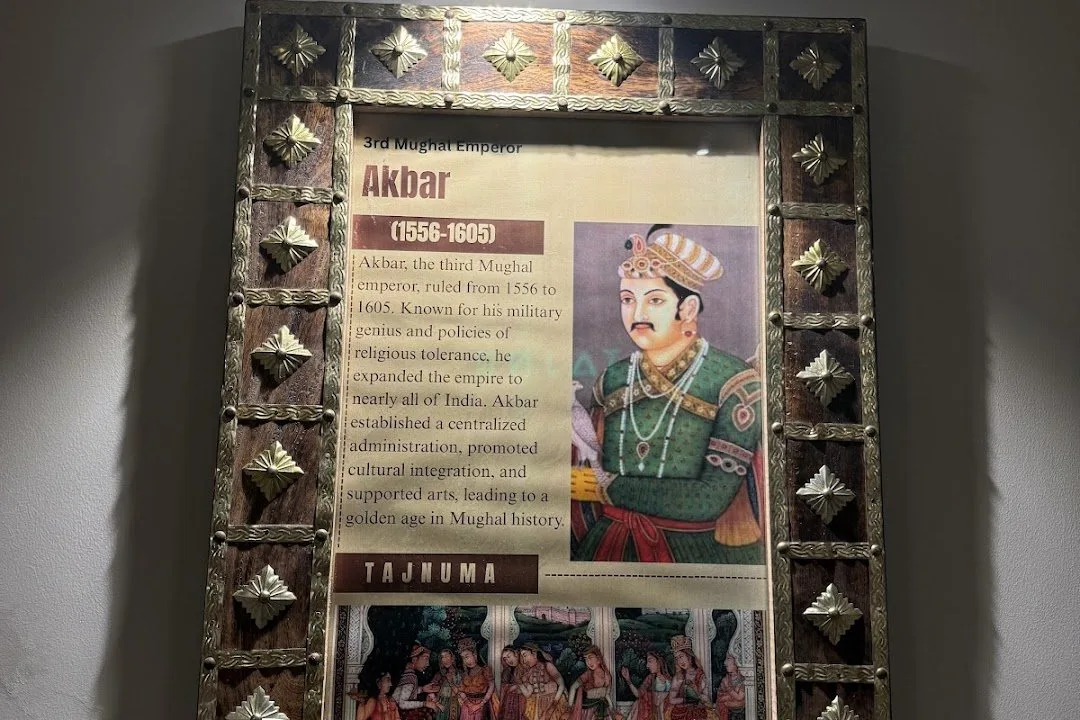
Akbar's own habits are documented by his chronicler. He ate once a day and ate meat sparingly, abstaining from it entirely on a growing number of days in the year, and he is recorded expressing discomfort with the habit of eating it at all — the wish to give it up appears in the account rather than being read into it.
He also restricted animal slaughter across the empire on certain days. Whatever the mixture of conviction, politics and personal taste behind it, the emperor at the centre of the tradition was, for substantial parts of the year, eating from the meatless side of his own kitchen.
The Jain Teachers at Court
Akbar's religious curiosity was wide and well documented. He invited scholars of many traditions to debate at his court, and among those who came were Jain teachers — the Svetambara monk Hiravijaya Suri arrived at his invitation in the early 1580s and spent an extended period there.
The influence shows up in policy, not just conversation: orders restricting the killing of animals on particular days are part of the record of this period. A court that hosted Jain teachers for years, and legislated in that direction, was a court that took vegetarian eating seriously as a question rather than treating it as a dietary quirk.
Vegetarian Households Inside the Palace
There is a simpler, more domestic reason too. The Mughals married into Rajput families as a matter of state policy, and those marriages brought Hindu households, their attendants and their kitchens into the imperial establishment.
An imperial kitchen serving that establishment had to cook, routinely and well, for people who did not eat meat — not as an accommodation but as ordinary daily work. The vegetarian side of the repertoire was not a modern adaptation. It was maintained because there were people at the centre of the empire who ate from it every day.
The Dishes That Were Never Meat
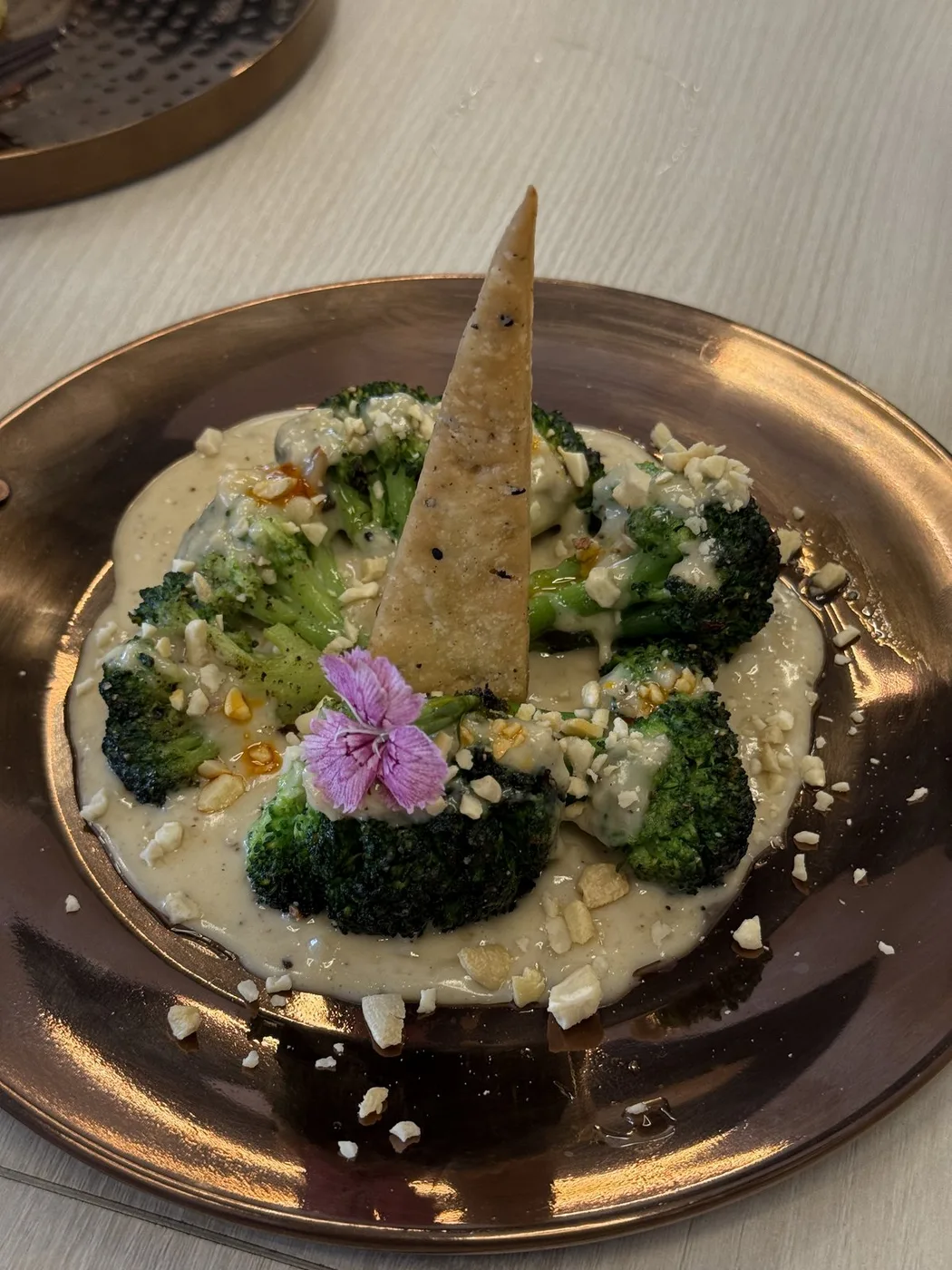
A great deal of the tradition never involved meat in the first place. The lentil cooking, from plain to slow-cooked and heavily enriched. The rice dishes that are not built on meat. The breads, plain and enriched. Vegetables cooked in the same gravies of nut paste, dairy and whole spice that the meat dishes use, because those gravies are the actual technique.
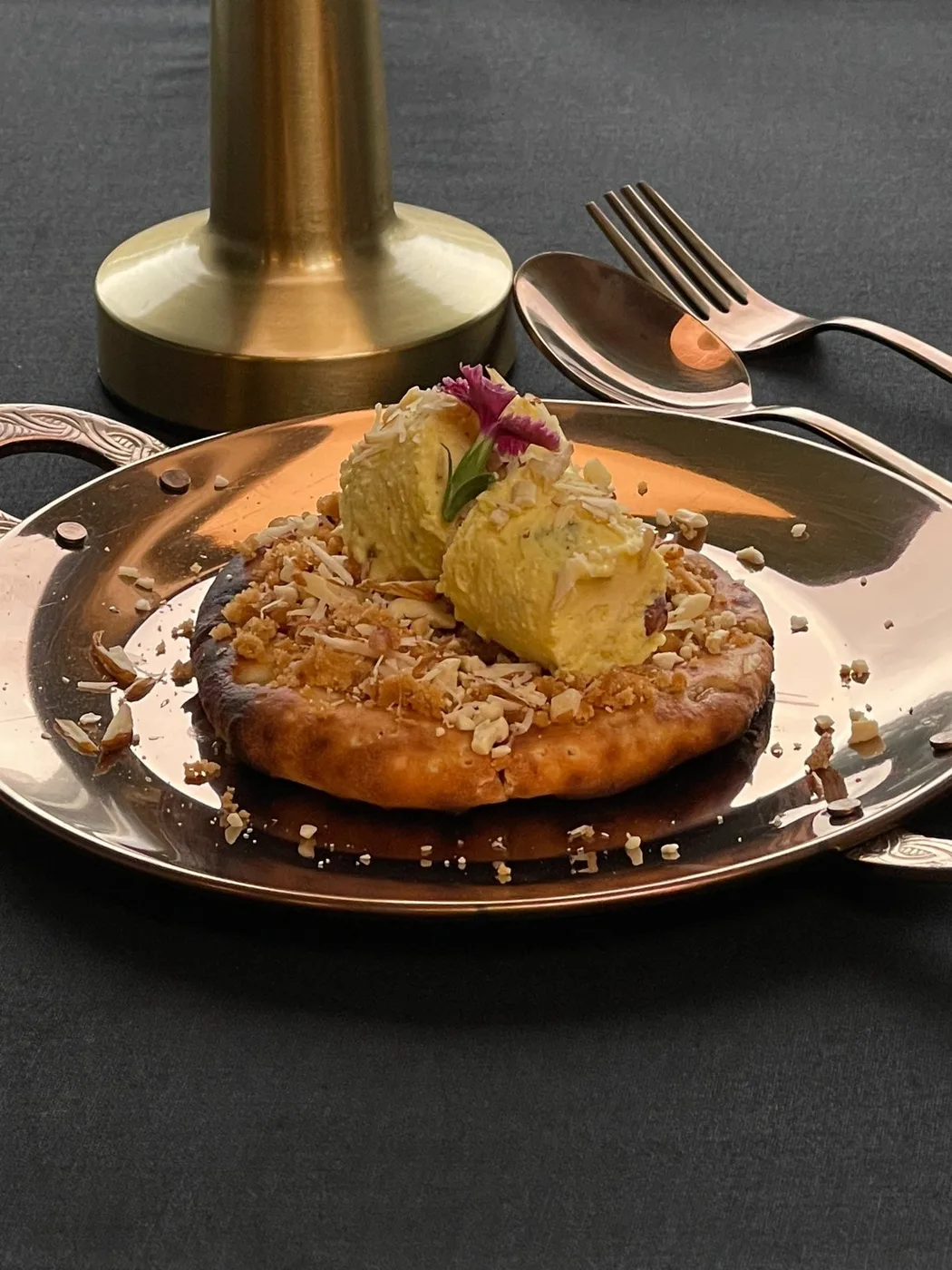
And the entire sweet course, which was always built on reduced milk, sugar, flour, nuts and saffron. Nobody has ever had to adapt a Mughlai dessert.
What This Means for a Kitchen Now
It means a vegetarian Mughlai kitchen is not performing a substitution. The techniques — slow cooking under a seal, layering rice, building body with nuts and dairy, using whole spices for aroma rather than heat — are the cuisine. They work on vegetables, lentils and paneer exactly as they work on anything else.
It also means the honest version of this argument does not overclaim. Nobody is saying the Mughal court was vegetarian; it plainly was not. The claim is narrower and better evidenced: the tradition always had a substantial meatless repertoire, formally recognised in its own records, and cooking only from that side of it is a legitimate reading of the cuisine rather than a compromise with it.
That is the argument our kitchen is making. The menu is where it gets tested, and the pure veg restaurant page sets out how we work.