Say “kebab” to most people and they picture meat on a skewer over coals. On a Mughlai menu the word stretches much further: patties fried on a griddle, mince so fine it dissolves on the tongue, chunks charred in a clay oven, even soft rounds of hung curd. Kebabs are defined by technique far more than by what goes into them — which is exactly why a vegetarian kitchen can cook the whole family. Here is how to tell them apart.
In this article
First, What Makes a Kebab
The word reached India through Persian, and the cooking came with the courts that spoke it. At its broadest, a kebab is food cooked dry — grilled, roasted, griddled or shallow-fried — rather than simmered in a sauce. Inside that broad idea sit families defined by shape and method: on a skewer, as a patty, in pieces. Learn those, and any kebab menu in Agra makes sense.
Seekh: The Skewer
Seekh simply means skewer. A seekh kebab is a spiced mince pressed by hand around a long metal skewer into a sausage shape and cooked over charcoal or in the tandoor until it is charred outside and juicy within. The skill is in the binding: the mixture has to cling to the metal and not slide off into the fire.
Vegetarian seekh kebabs use finely minced vegetables, corn, paneer or soya held together with a little binder. On our menu it is the Makkai aur Broccoli Seekh Kabab: minced corn and broccoli, skewered and grilled on live coal until golden and smoky.
Shami: The Griddled Patty
A shami kebab is a flat, round patty, traditionally made by cooking mince with chana dal and whole spices, grinding it all together, and pan-frying the patties on a griddle. The lentil is part of the classic recipe, which makes shami one of the easiest kebabs to make vegetarian. Where the name comes from is debated; one common explanation links it to Sham, the old name for Syria and the Levant, but treat that as a theory.
The same griddled-patty idea runs through the vegetarian Cheese Stuffed Hara Bhara Kebab — a green kebab traditionally made with spinach, peas and potato, here with a molten cheese centre — and the Peanut Butter Beetroot Tikki.
Galouti: The One That Melts
Galouti is the most delicate kebab of all — a mince pounded so fine, and tenderised so thoroughly, that it barely holds together and melts as soon as it is in your mouth. The name is usually connected to galavat, softening or melting. It is a Lucknow speciality, and the city tells a story about a nawab who had lost his teeth and wanted meat he did not need to chew. Versions of that story attach it to different rulers; it is best enjoyed as a legend.
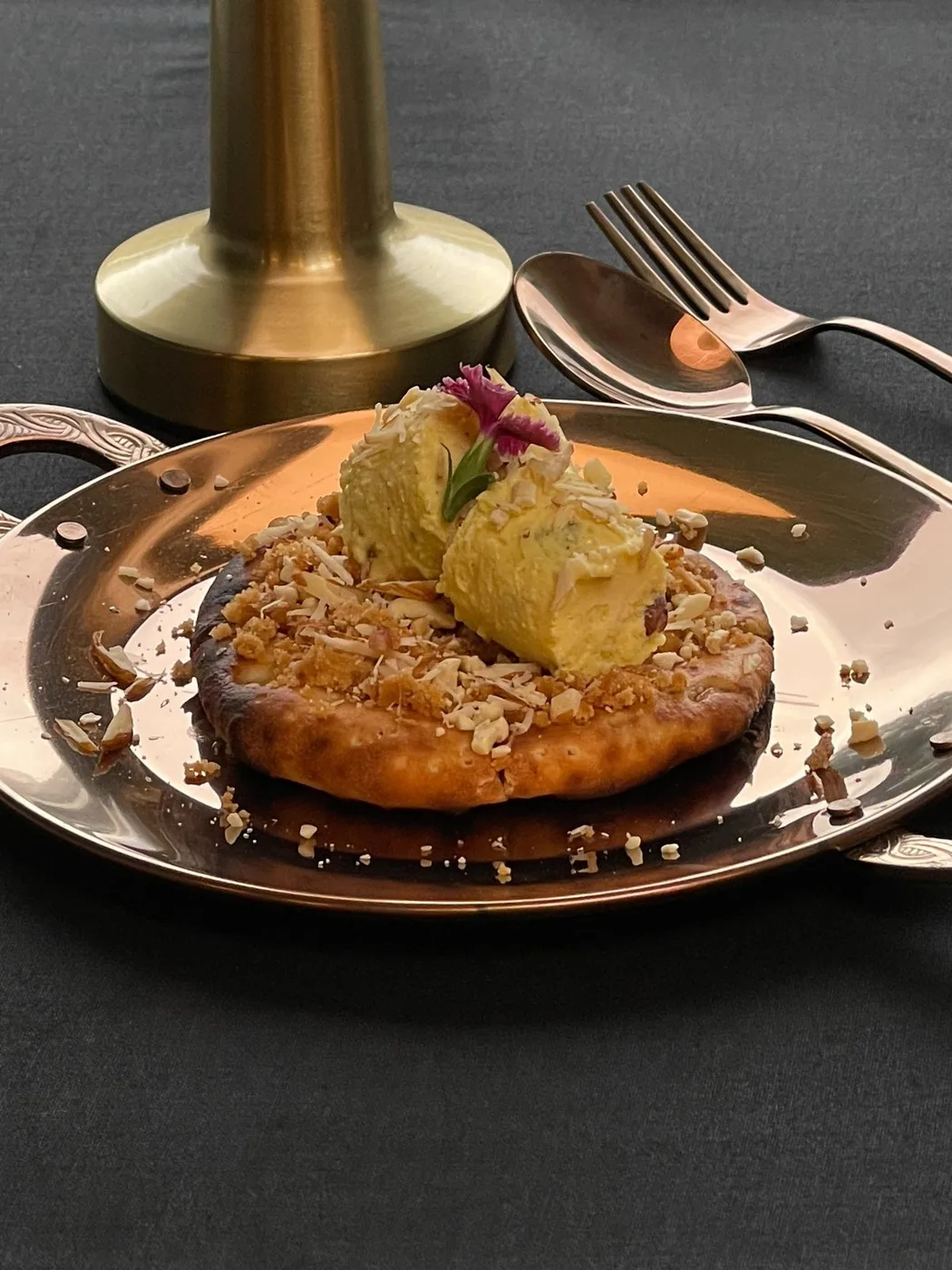
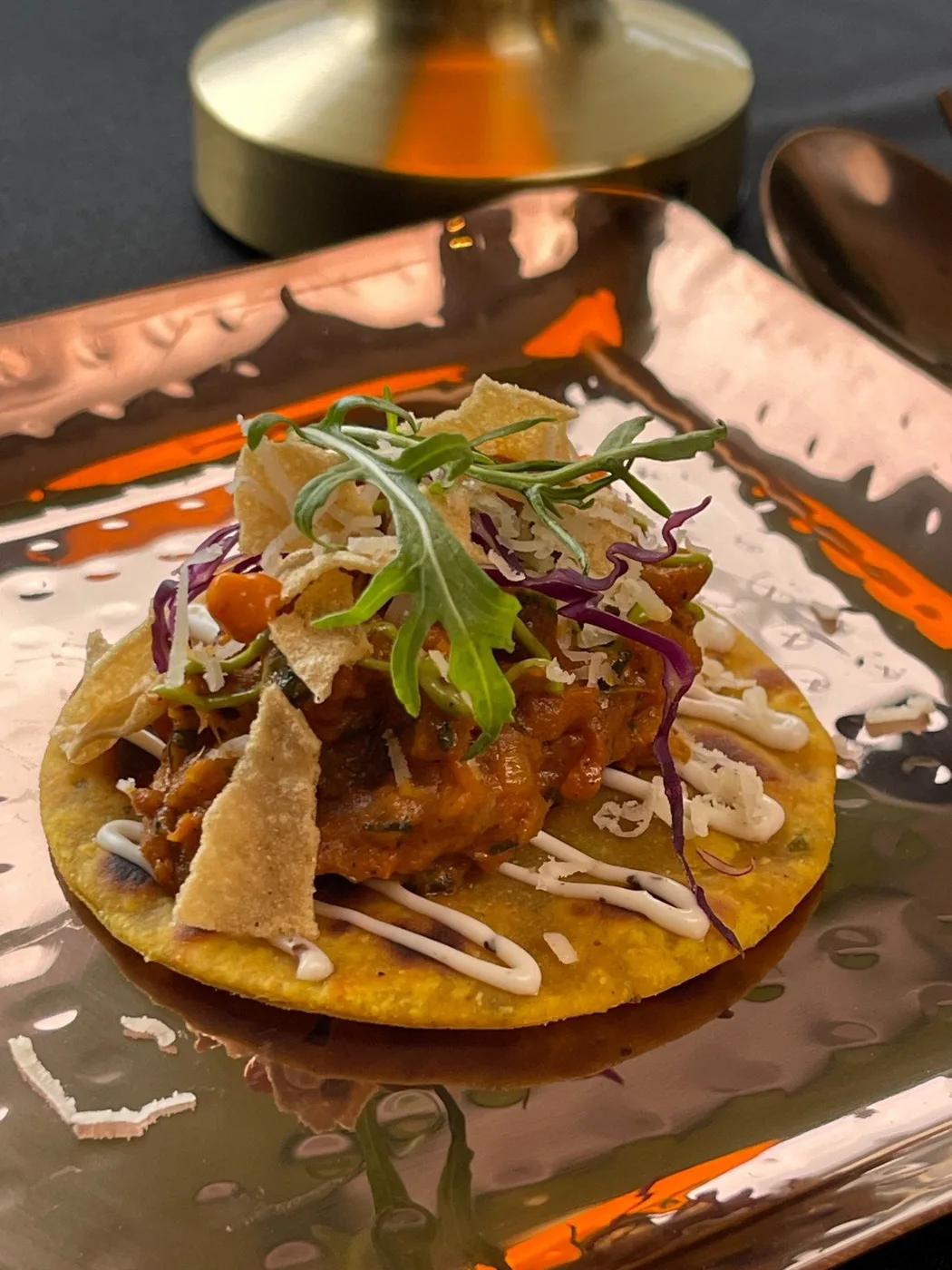
Vegetarian galouti has to reproduce that texture without meat, and mushroom and kidney beans do it remarkably well. Our kitchen makes two: the Truffle Mushroom Galouti Kebab with Khasta Parantha and the Rajma Galouti with Ulte Tawa ka Parantha, each served on a flaky bread, as galouti traditionally is.
Tikka and Boti: Pieces in the Fire
Tikka means pieces. Chunks are marinated — usually in curd and spices — threaded on skewers and cooked in the searing heat of a tandoor. Boti is a similar word for small morsels. Paneer tikka is the vegetarian classic, and the menu here runs from Basil Pesto Paneer Tikka and Mawa Paneer Tikka with Chimichurri to Bharwa Mushroom Tikka, Kathal-e-Achari Tikka (jackfruit in a mustard-based pickle marinade) and Soya Boti Shan-e-Lebab.
Dahi ke Kebab: The Vegetarian Original
Not every vegetarian kebab is a stand-in for a meat one. Dahi ke kebab are made from hung curd — yoghurt strained until thick — mixed with spices, shaped into rounds and fried until there is a crisp crust around a creamy heart. They are entirely their own thing, and they show how naturally the kebab technique fits vegetarian ingredients. Ours are on the menu as Dahi Ke Kebab.
The deeper history of meat-free cooking at the Mughal court is in vegetarian Mughlai, a history.
How to Order a Kebab Course
For two people, three kebabs from different families makes a good start: something from the tandoor (a tikka), something soft (a galouti or dahi kebab) and something skewered or griddled. Add a bread and you can treat it as a meal. All of the kebabs above are in the Aghaz-e-Taj section of our menu, and the Mughlai tasting menu includes a kebab course if you would rather the kitchen chose. For the vocabulary on the rest of the menu, see our diner's glossary.