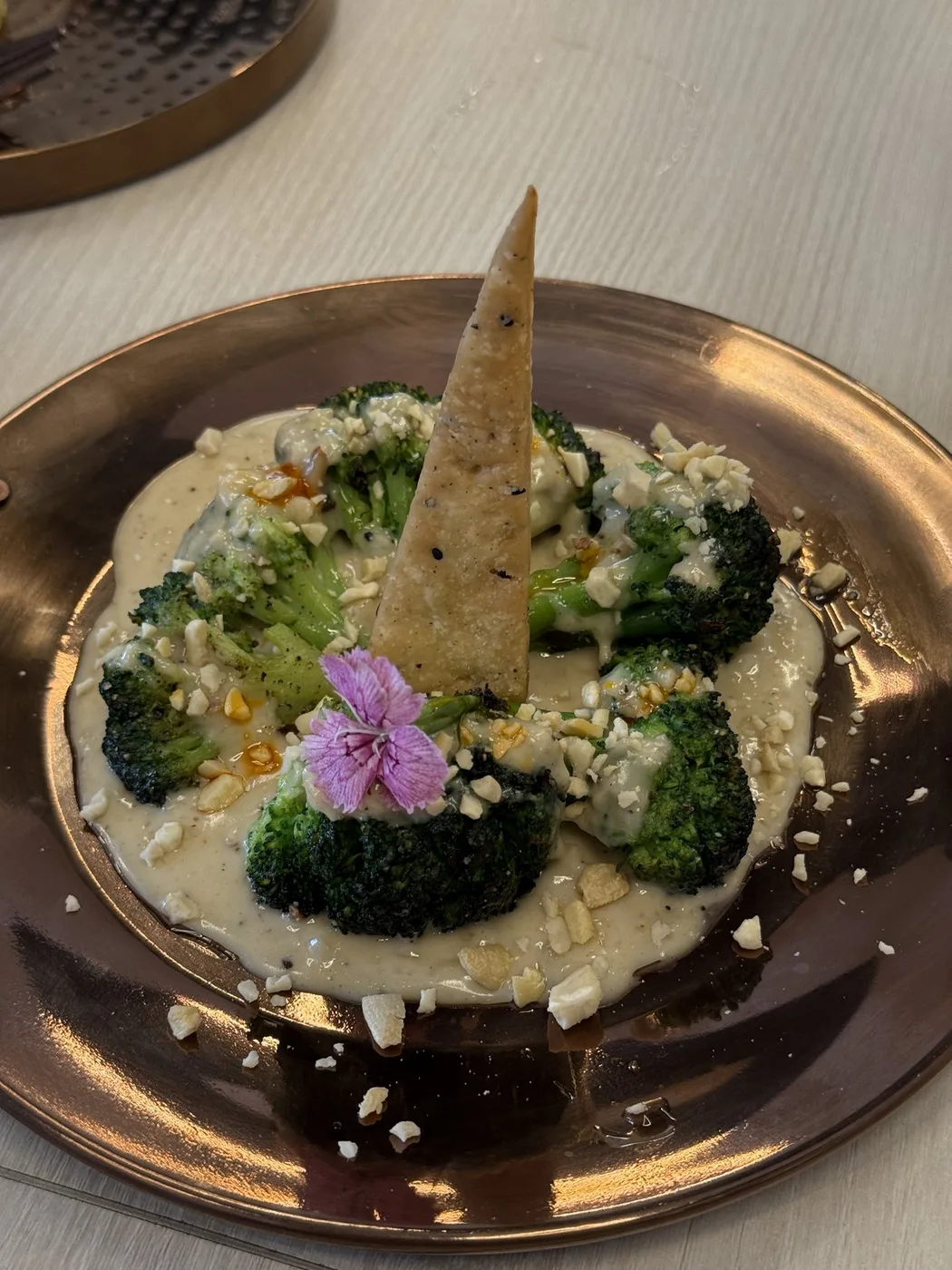
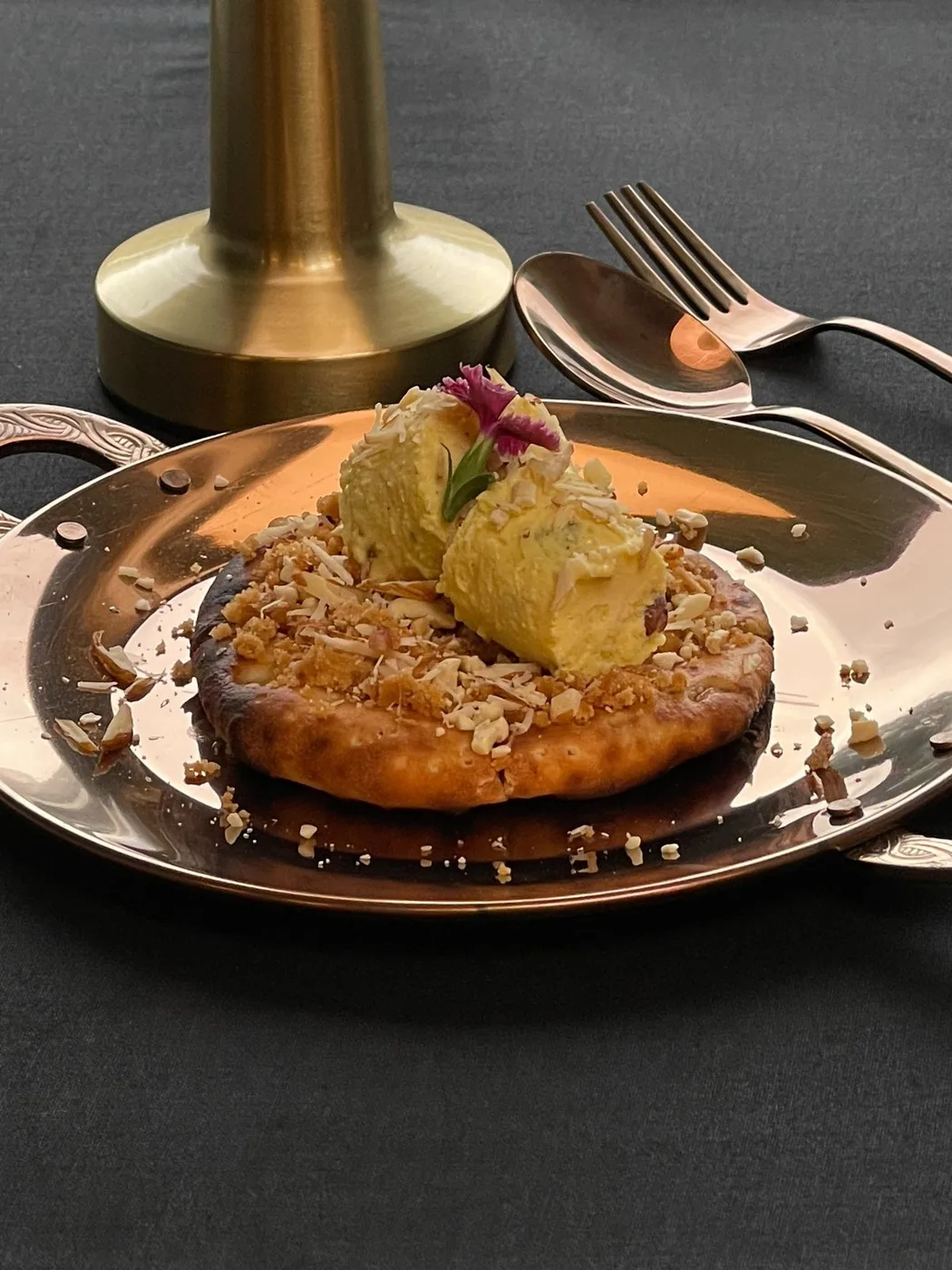
You sit down in Agra, open the menu, and meet a wall of words: shorba, galouti, khamni, handi, sheermal, dum. Some are Persian, some are Hindi, some are Urdu, and a few are the names of cooking vessels rather than dishes. Restaurants rarely stop to explain them. This glossary does — the terms you are most likely to meet in the city, in plain English.
In this article
Soups and Starters
- Shorba — a soup or thin broth. The word is usually traced to Persian, and versions of it are used for soup from Turkey to India. Usually lighter than a Western cream soup.
- Kebab — broadly, anything grilled, roasted or pan-cooked in pieces or patties. Not always on a skewer, and not always meat.
- Tikka — pieces, marinated and grilled. Paneer tikka is cubes of paneer done this way.
- Chaat — the family of tangy, crunchy street snacks dressed with chutneys and curd.
- Tikki — a small patty, typically potato, fried on a griddle.
Gravies and Curries
- Korma — a braise in a rich sauce, traditionally built on curd, nuts and gentle spice. Mild does not mean bland: a good korma is fragrant rather than hot.
- Kofta — dumplings or balls, minced or mashed, fried and then simmered in gravy. Vegetarian koftas use paneer, vegetables or dried fruit.
- Makhani — “with butter”: a smooth tomato, butter and cream sauce.
- Kadhai — the wok-like iron pan; a “kadhai” dish is cooked fast in one, usually with peppers and coarsely ground spice.
- Handi — a deep, narrow-necked pot; a handi dish is slow-cooked and usually creamy.
- Nihari — a slow-cooked, deeply spiced stew from the Mughal tradition, historically eaten in the morning. Vegetarian kitchens make it with jackfruit.
- Masala — a spice mix, and by extension a dish cooked in a spiced sauce.
Lentils, Paneer and the Vegetarian Basics
- Dal — lentils, and the soupy dish made from them. Black dal is slow-cooked whole urad; yellow dal is usually split lentils with a tempering.
- Tadka — tempering: spices fried in hot ghee or oil and poured over a dish at the end.
- Paneer — fresh, unaged cheese made by curdling milk. It does not melt.
- Khamni — crumbled and tempered, as in Paneer Khamni.
- Chaap — in vegetarian kitchens, soya chaap: soy protein shaped around a stick and grilled or curried.
- Kathal — jackfruit, cooked young as a vegetable.
Rice and Bread
- Pulao — rice cooked in stock with spices so the grains absorb flavour. Biryani layers part-cooked rice with a spiced filling and steams them together. We have written about the difference.
- Dum — sealed, slow steam-cooking; see dum pukht.
- Zarda — sweet saffron rice with nuts and raisins.
- Naan — leavened bread baked against the wall of a tandoor.
- Khameeri — leavened, from the Persian word for yeast or dough starter.
- Sheermal — a soft, slightly sweet, saffron-tinted bread enriched with milk.
- Laccha parantha — a layered, flaky flatbread.
- Raita — seasoned curd, mixed with vegetables, fruit or crisp boondi.
For the full story of the breads, see Mughal breads.
Sweets
- Mawa (or khoya) — milk cooked down to a thick, fudge-like solid; the base of many Indian sweets.
- Rabdi — milk reduced slowly with layers of skin folded back in, sweetened.
- Shahi tukda — “royal piece”: fried bread soaked in syrup and topped with rabdi.
- Kulfi — dense, slow-frozen reduced milk; not churned like ice cream.
- Daulat ki chaat — a winter milk foam, whipped until almost weightless.
- Petha — Agra's candied ash gourd; see our guide.
More in Mughal desserts.
Putting It to Use
Once you know the words, a menu reads like a map. Our menu uses most of them: Shorba-e-Taj for soups, Aghaz-e-Taj for kebabs, Dastan-e-Dawat for the main course with dishes like Mawa Paneer Kofta, Exotic Veg Handi, Paneer Khamni and Kathal Nihari, and Shirini-e-Taj for sweets. We have also written a walk-through of how to read the Tajnuma menu.
If it still feels like too much, take the tasting menu and let the kitchen do the ordering.