The word dum appears on menus all over north India, usually in front of the word biryani, and is rarely explained. It is not an ingredient or a recipe. It is a way of finishing a dish: the pot is closed, sealed so that nothing escapes, and left over very gentle heat until the food has cooked in its own steam. The idea is simple. Doing it well is not.
In this article
What the Words Mean
Dam is a Persian word meaning breath, and by extension steam. Pukht comes from the Persian verb for cooking. Dum pukht is therefore food cooked on its own breath, and “to give a dish dum” is to seal it and let it finish that way.
In everyday use the longer phrase has been shortened. A dum biryani or a dum aloo is a dish that has been finished under a seal, whatever else happened to it first.
How It Works
The pot is heavy and wide-bodied with a narrower mouth — a handi, or for large quantities a deg. The food goes in partly cooked or raw, with only a little liquid. The lid is set on top and the join between lid and pot is closed with a rope of plain dough, which bakes hard and makes the seal.
The heat is low and it comes from two directions. Traditionally the pot sits over embers, and more live coals are placed on the lid, so that the contents are warmed from above and below rather than scorched from underneath. Then it is left alone. Nothing is stirred, and nobody lifts the lid to look, because that would let out the steam that is doing the cooking.
What the Seal Changes
In an open pan, steam leaves, and much of the aroma of the spices leaves with it. That is the smell of cooking that fills a kitchen. Under a seal it has nowhere to go, so it stays in the pot and in the food.
This is why dum suits the aromatics of Mughlai cooking so well. Saffron, kewra, rosewater and the whole spices of the royal spice box are all fragrant rather than hot, and fragrance is exactly what an open pan loses. It is also why the dough seal is broken at the last moment: the first breath out of the pot is part of the dish.
The Famous Story, and the Record
The story most often told puts the invention of dum pukht in Lucknow in the 1780s. During a famine, it is said, Nawab Asaf-ud-Daula fed the labourers building the Bara Imambara from enormous sealed pots of rice and meat, and when he smelled one being opened he ordered the method adopted in his own kitchen.
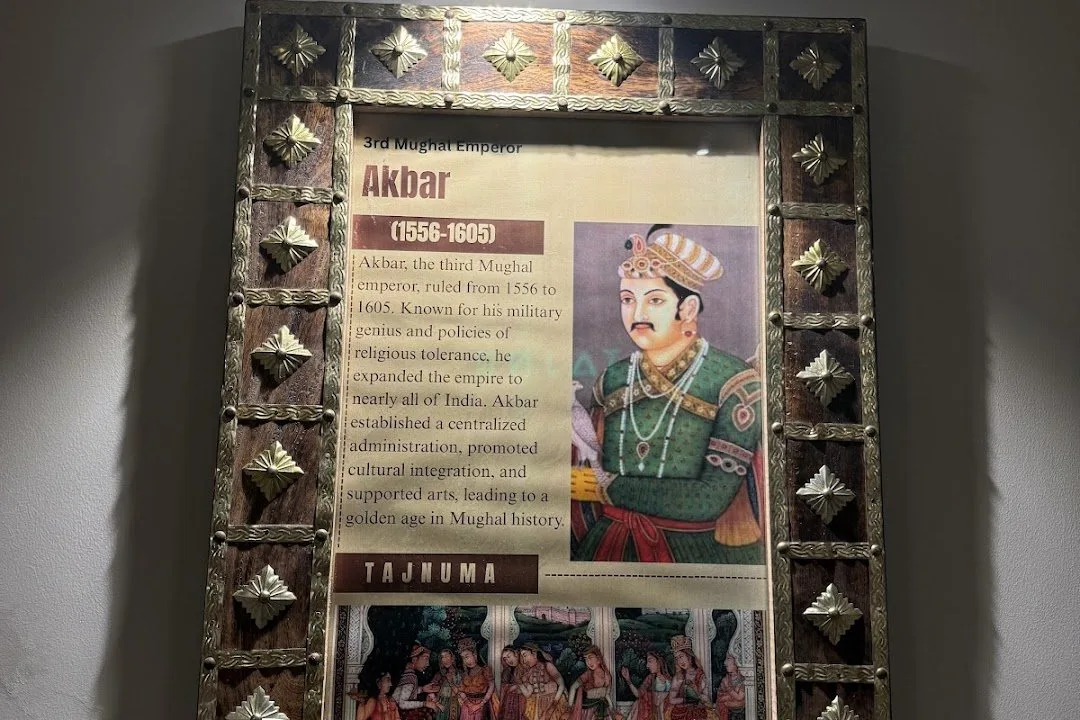
The Nawab and the Bara Imambara are history. The kitchen anecdote is a story: it is repeated everywhere and sourced nowhere, and we pass it on only as that. It also cannot be the beginning of the technique, because the name is older. A dish called dampukht is listed among the meat dishes of Akbar's kitchen in the Ain-i-Akbari, compiled in the 1590s, some two centuries before the Imambara was built.
What is fair to say is that the courts of Awadh refined dum cooking and made it famous, after cooks had followed patronage away from the Mughal capitals. Lucknow did not invent the sealed pot. It perfected it.
Dum and Biryani
Biryani is the dish most people associate with dum, and the reason is structural. Rice that has been boiled until it is most of the way done is layered over a spiced filling, saffron milk and ghee go over the top, and the pot is sealed. During the dum the rice finishes cooking in the steam rising from the layer below, and takes on its flavour without being stirred into it.
That is the difference between a biryani and a pulao, in which rice and the other ingredients are cooked together in one liquid from the start. It is also why a properly made biryani has separate grains, some white and some gold.
Dum Without Meat
The historical dum dishes were largely meat dishes, and the long cooking was partly a way of making tough cuts tender. Vegetables do not need that, and they will not stand hours of heat. But the other half of the method — keeping the aroma in — applies to them completely.
So a vegetarian dum is shorter and gentler. Vegetables, paneer or jackfruit are cooked most of the way first, then layered with rice and sealed for long enough for the flavours to move through the pot. The same patience, applied differently, is what makes a slow-cooked dal: hours over low heat, until the lentils have broken down into the gravy.
On Our Menu
The biryani section of our menu carries the name Dam-e-Shahi, and everything in it is vegetarian: Veg Biryani, Paneer Tikka Biryani, Malai Soya Chaap Biryani and, in season, Kathal Biryani made with jackfruit. Dal Tajnuma, our slow-cooked black lentil dal, belongs to the same family of patient cooking.
For more dishes in the tradition, see 12 Vegetarian Mughlai Dishes to Try, or the full menu.