Saffron is the one spice on a Mughlai menu that most people can name before they have tasted it. It is in the rice, in the milk sweets and in the names of the dishes themselves — anything called zafrani or kesari is telling you it is there. It is also the most expensive spice in the world, and the reasons for that are practical rather than romantic.
In this article
What Saffron Actually Is
Saffron is the dried stigma of a crocus, Crocus sativus. The plant flowers in autumn, and each flower carries three red stigmas. Those three threads are the entire crop.
They have to be picked by hand, flower by flower, and then separated and dried. No machine does this well. It takes a very large number of flowers to make a small weight of spice, and that labour is what you pay for. The price of saffron is mostly the price of the hours spent picking it.
Two Names: Kesar and Zafran
India uses two words for it. Kesar is the Hindi name, from Sanskrit. Zafran is the name that came with Persian and Arabic, and it is the root of the English word as well.
On a Mughlai menu the Persian word tends to win, because Persian was the language of the court. A dish described as zafrani is simply one made with saffron. Zarda, the sweet rice, takes its name from the Persian zard, yellow — the colour the saffron gives it.
The Mughals and Kashmir
Saffron has been grown in Kashmir for a very long time, on the high ground around Pampore, a short distance from Srinagar. How it first reached the valley is told in several different stories, none of which can be checked, so we will not choose between them.
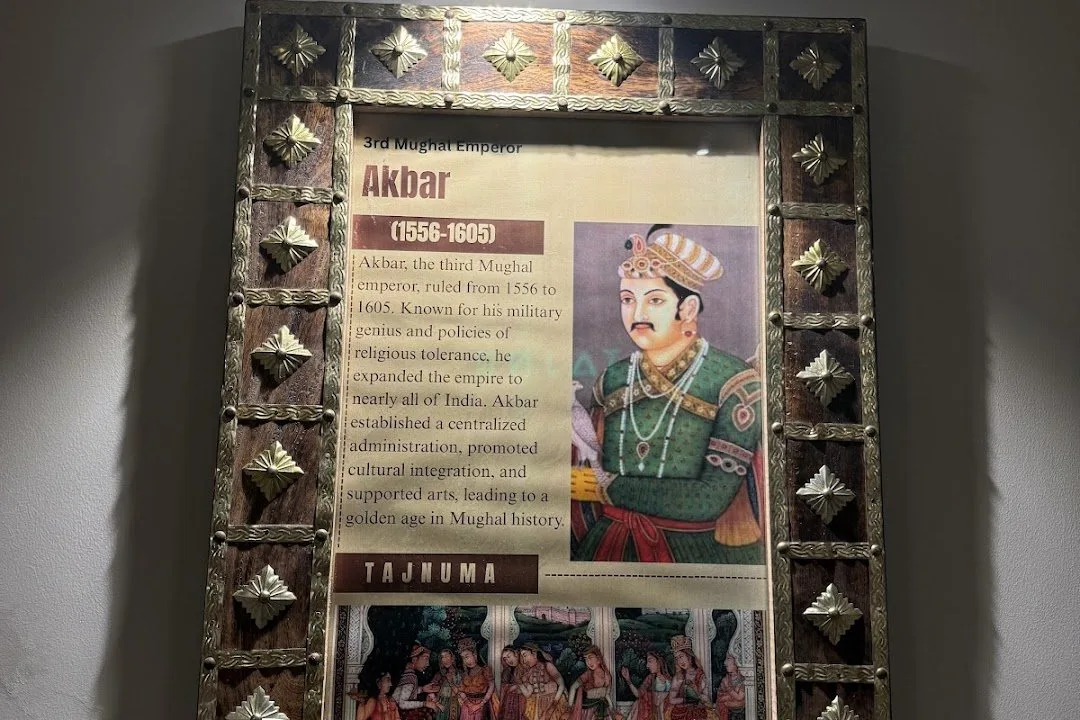
What is on record is what happened next. Akbar annexed Kashmir in 1586, and from then on the empire had a saffron-growing region inside its own borders. Abu'l-Fazl describes the saffron fields of Kashmir in the Ain-i-Akbari, and Jahangir, who travelled to the valley repeatedly, wrote about seeing them in flower in his memoirs. Saffron also appears in the ingredient lists the Ain gives for the imperial kitchen.
Kashmir still grows it, and Kashmir saffron now holds a Geographical Indication registration in India. Most of the world's saffron today, however, comes from Iran.
What It Does in a Dish
Saffron does two jobs. It colours — a warm gold, not the flat yellow of turmeric — and it scents, with a smell that is usually described as somewhere between honey and hay. The flavour is slightly bitter, which is why it sits so well against milk and sugar.
It is not used the way other spices are. It is not fried in ghee at the start of a dish. The threads are steeped in a little warm milk or water until the liquid turns deep orange, and that liquid is added late, so that the scent is still there when the dish reaches the table.
Rice, Milk and Sherbet
Rice is where most people meet it. In a biryani, saffron milk is poured over the top layer of rice before the pot is closed, which is why some grains come out gold and others stay white. In zarda the whole dish is coloured and sweetened, and finished with nuts and raisins.
The second home of saffron is milk. The desserts of the Mughal table are built on milk reduced slowly, and saffron, cardamom and rosewater are what scent them. The third is drinks: saffron in sweetened milk or in a sherbet is one of the oldest ways of serving it.
Why a Little Is Enough
Because it is expensive, saffron has always attracted substitutes. Safflower, a different plant altogether, gives colour without the scent, and turmeric gives a yellow that cooks will recognise as the wrong one. Neither is harmful; neither is saffron.
The real thing is used in very small amounts. A pinch of threads is enough for a pot of rice, and more than that makes a dish taste medicinal rather than rich. If a plate is a very bright, even yellow all the way through, the colour has usually come from somewhere else.
Saffron on Our Menu
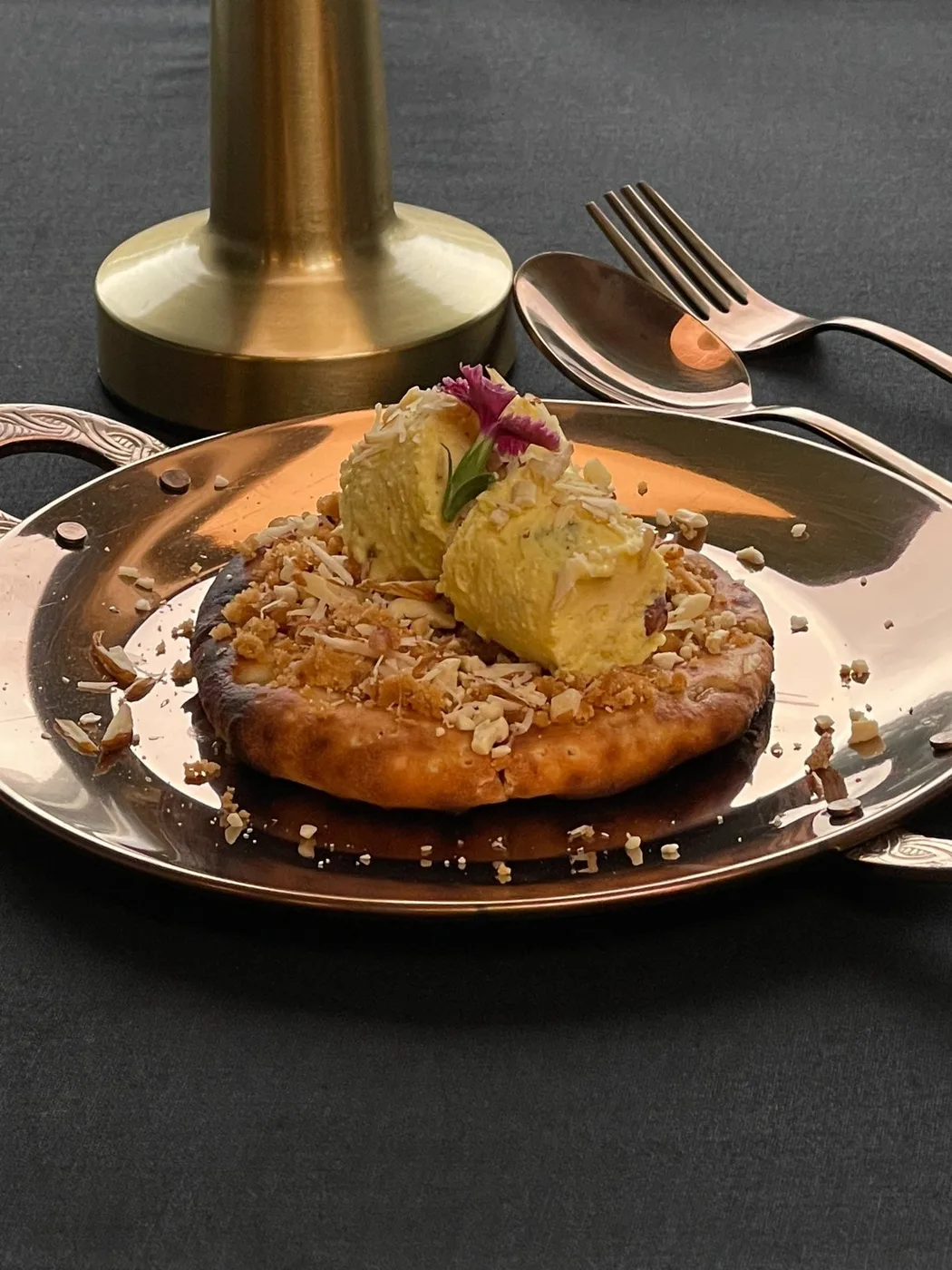
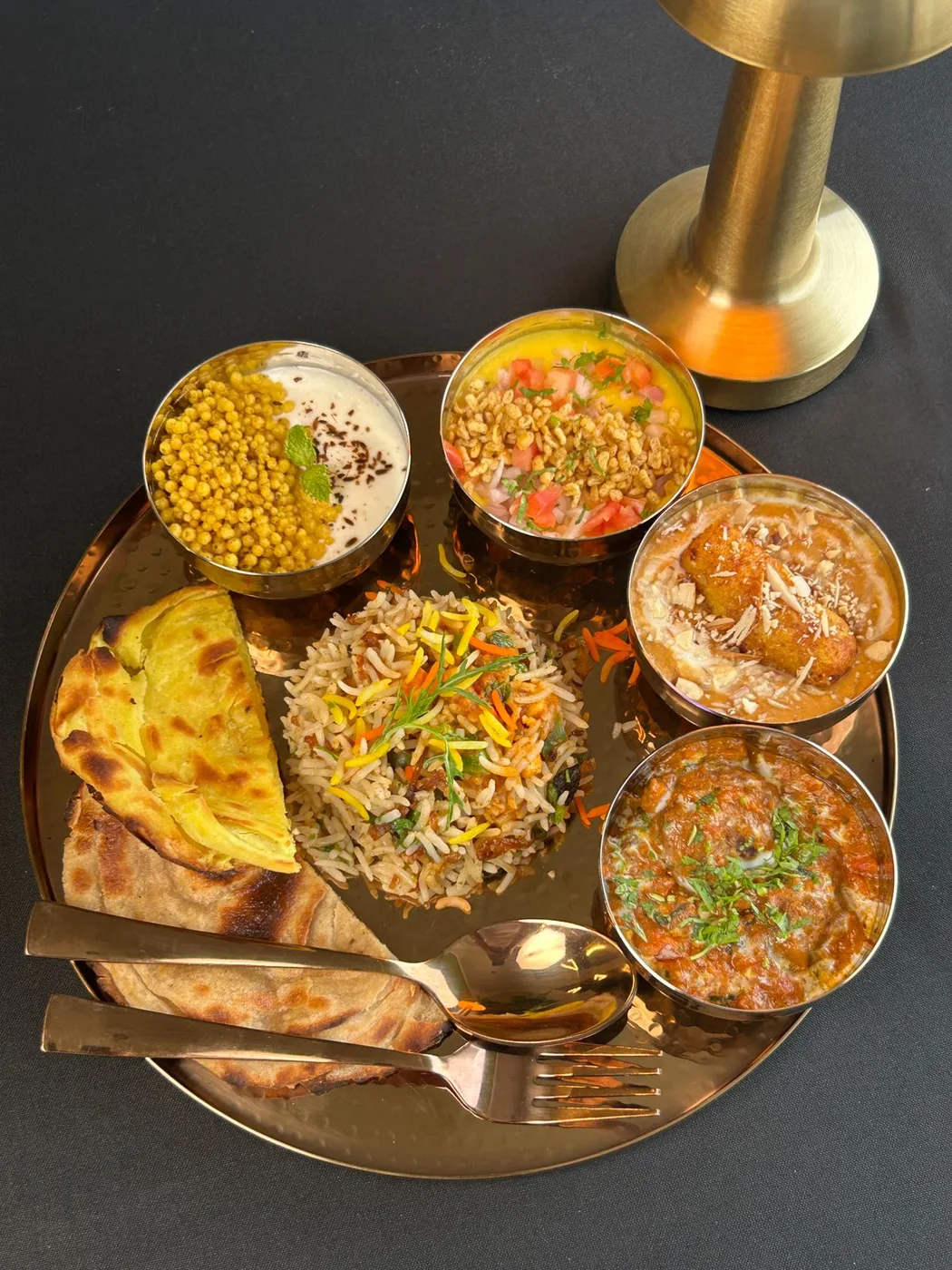
Two dishes on our menu are built around it. Zafrani Zarda Pulao is the sweet saffron rice described above, tossed with nuts and raisins. Daulat ki Chaat is a saffron-scented milk foam, light enough that it barely holds its shape, finished with jaggery chikki.
Saffron is one of ten aromatics we have written about in the royal spice box. For the dishes themselves, see the full menu.