The Mughals are remembered for kebabs, biryani and whole roasted meats, and the court kitchen could produce all of them. What is remembered less often is that Akbar — the emperor who built Agra Fort and Fatehpur Sikri, and the one most people mean when they say “the Mughals” — spent a growing share of his life not eating meat at all. It is not a legend. His own court wrote it down.
In this article
What Abu'l-Fazl Recorded
Abu'l-Fazl was Akbar's friend, minister and chronicler, and the author of the Akbarnama and its administrative volume, the Ain-i-Akbari. In his account of the imperial household he describes the emperor's eating habits directly: Akbar ate once in twenty-four hours, did not keep to a fixed mealtime, and cared little for meat.
More specifically, Abu'l-Fazl records that Akbar kept days on which he ate no meat at all, and that the number of those days grew over the course of his reign until they covered a large part of the year. He does not present this as a diet. He presents it as a discipline — part of the emperor's wider interest in restraint.
A Class of Dishes Without Meat
The kitchen was built around this. When the Ain sorts the cooked dishes of the imperial kitchen into classes, the first class it names is made with no meat, and it gives it a name: sufiyana, the food of the Sufi, or of the abstaining days. Rice, wheat, lentils, ghee, vegetables and spices, weighed out by the quartermasters like everything else.
That a named, formal category of meatless cooking sat at the head of the list in the most powerful kitchen in India is the fact that makes vegetarian Mughlai food a continuation rather than an invention. We have written more about what that implies.
In His Own Words
Abu'l-Fazl also collected Akbar's sayings, and several of them are about meat. The best known is usually translated as: “It is not right that a man should make his stomach the grave of animals.” Others in the collection describe the eating of meat as a habit the emperor wished he had never formed, and speak of sparing the lives of animals as a virtue.
Sayings collected by a devoted courtier have to be read with that in mind. But they are consistent with everything else the court recorded about his table.
The Jain Connection
Akbar was famously curious about religion. At Fatehpur Sikri he built the Ibadat Khana, a house of worship where he held debates between scholars of different faiths — Muslim, Hindu, Zoroastrian, Christian and Jain.
The most senior Jain teacher to come to court was Hiravijaya Suri, who travelled to Fatehpur Sikri in the early 1580s. Jain accounts of the visit, and imperial orders that Jain communities preserved, record Akbar forbidding the slaughter of animals on particular days — including during Paryushana, the most important period of the Jain year. How far those orders were enforced across an empire is harder to know. That they were issued is well attested.
After Akbar
His son Jahangir was a very different man at the table — his memoirs record his enthusiasm for hunting, fine fruit and wine. But even Jahangir kept up restrictions on slaughter on certain days of the week, in part out of respect for his father's practice. The idea that a Mughal ruler might set aside days without meat did not disappear with Akbar.
Eating the Sufiyana Tradition Today
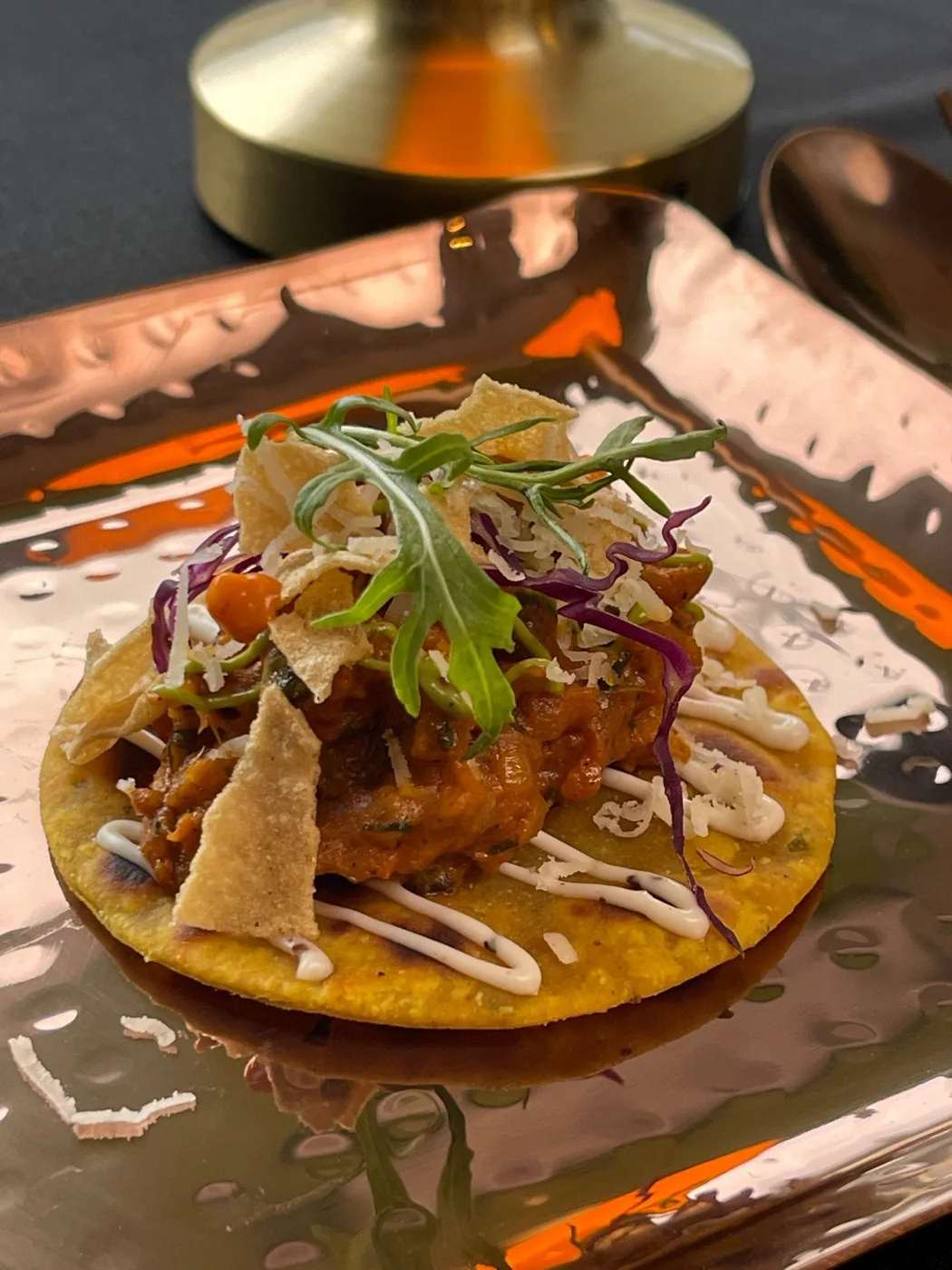
What survives of sufiyana cooking is not a set of recipes but a way of cooking: lentils cooked slowly, rice enriched with ghee and saffron, milk reduced into sweets, and whole spices used for fragrance rather than heat. It is the grammar our kitchen works in — the Mughal kitchen, cooked entirely without meat.
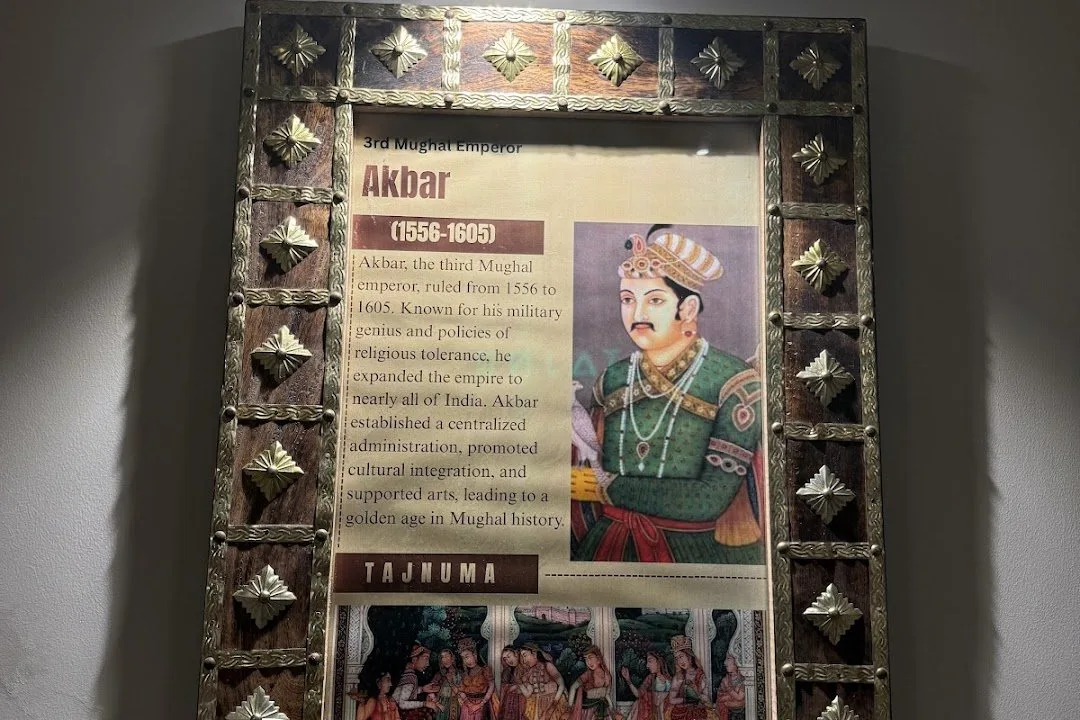
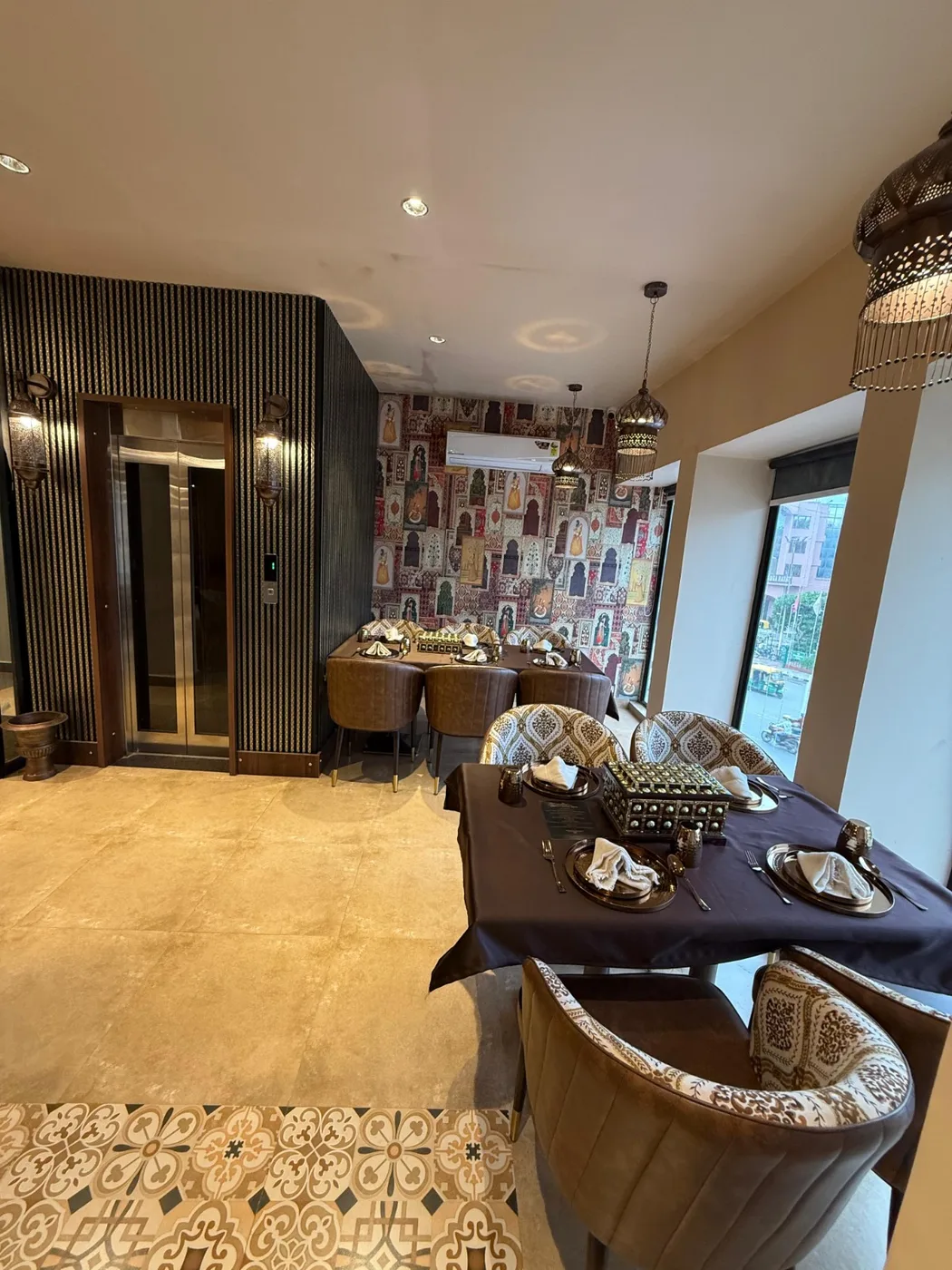
If you want to taste it, Dal Tajnuma and the Zafrani Zarda Pulao are the most direct line back; the twelve dishes worth ordering cover the rest, and a framed panel on Akbar hangs in our dining room while you eat them.