Ask in Agra about “the Red Taj” and few people will know what you mean. It stands in a walled cemetery in the middle of the city: a small domed tomb of red sandstone, clearly modelled on the Taj Mahal, built at the very start of the 19th century for a European soldier of fortune.
In this article
Who Was John Hessing?
John William Hessing was a Dutch officer who, like a number of Europeans in late 18th-century India, made his career as a soldier in the service of Indian rulers. He served the Maratha leader Scindia, whose forces then controlled Agra, and he rose to command the garrison of Agra Fort. He died in 1803, the same year the British took Agra from the Marathas.
The Tomb
His widow raised a tomb for him in red sandstone that borrows the shape of the Taj Mahal: a central dome, smaller corner domes and arched facades with carved decoration. It is far smaller, and the material is the red of Agra Fort rather than the Taj’s white marble, but the inspiration is unmistakable — and so is the echo of a grieving spouse building a tomb, nearly two centuries after Shah Jahan.
Our piece on Shah Jahan and Mumtaz Mahal tells the original story.
The Old Catholic Cemetery
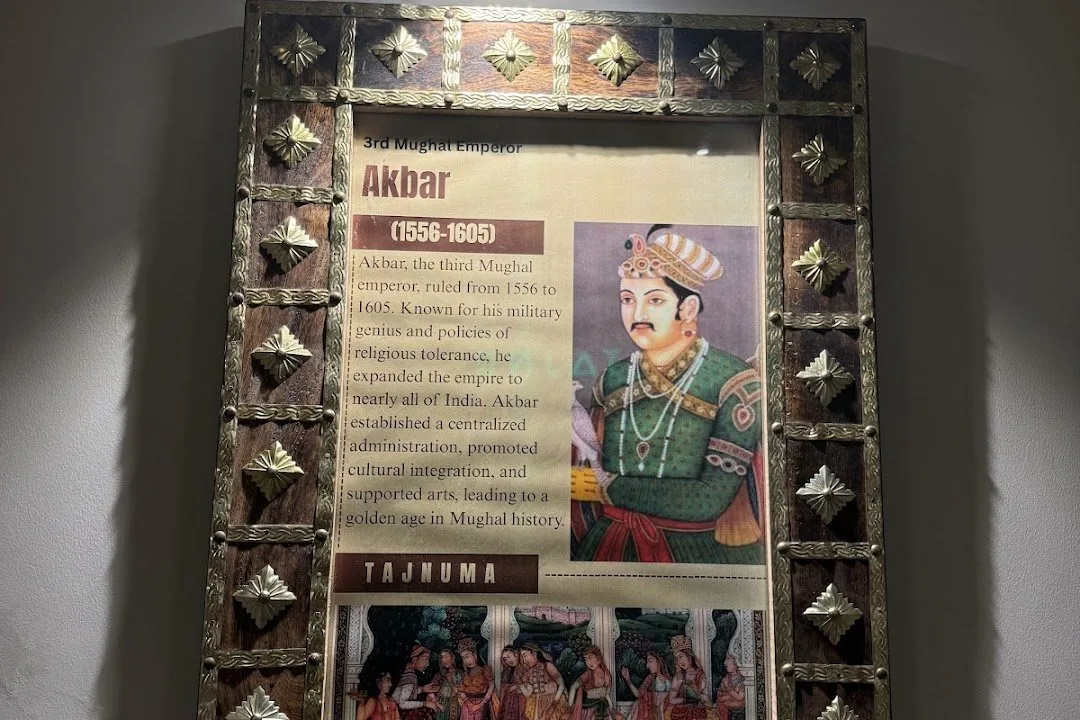
The tomb stands in Agra’s old Roman Catholic cemetery, one of the oldest Christian burial grounds in northern India. It goes back to the Mughal period, when Akbar allowed Jesuit missionaries and European and Armenian merchants to settle in the city. Among the graves you will find inscriptions in Armenian, Latin and Portuguese, a record of how international Mughal Agra was.
Visiting
The cemetery is in the city rather than near the Taj, so take a taxi or auto and ask for the old Catholic cemetery. It is a place of burial, so visit quietly and respectfully. Access and hours are set by the church authorities and are not like those of an ASI monument, so ask locally before you go.
For more of Agra’s less-visited sights, see Beyond the Taj. Tajnuma, on Fatehabad Road, is open from 12:00 pm for pure vegetarian Mughlai food.